Rapid Hemostasis Dynamics
Oxidized Regenerated Cellulose (ORC) reacts with capillary blood to form a dark, gel-like matrix within 2 to 4 minutes, stabilizing clot formation without swelling or tissue displacement.
In-Vitro & In-Vivo Antimicrobial Barrier
The acidic local microenvironment (pH < 4.0) created by ORC degradation exerts a broad-spectrum bactericidal effect against MRSA, MRSE, and Gram-negative pathogens common in hospital settings.
Turkish ÜTS & EU MDR Alignment
Complete technical documentation packages including Declaration of Conformity, CE 2017/745 MDR dossiers, and ISO 13485:2016 certificates formatted specifically for Ministry of Health (ÜTS) registration.
1. Clinical Fundamentals of Oxidized Regenerated Cellulose (ORC) Hemostats
Surgical intraoperative bleeding management is a critical determinant of patient outcomes, surgical duration, and postoperative recovery speed. Absorbable hemostatic agents derived from Oxidized Regenerated Cellulose (ORC) serve as an essential adjunct when conventional hemostatic measures such as suturing, electrocautery, or ligation are impractical or ineffective.
Unlike standard collagen or gelatin-based sponges, advanced ORC hemostatic gauze is produced through a controlled chemical oxidation of continuous alpha-cellulose fibers. This process converts primary hydroxyl groups into carboxylic acid functions, resulting in a biocompatible, poly-anionic polymer structure. When placed in contact with active parenchymal or venous oozing, the ORC matrix absorbs fluid, swells into a cohesive gelatinous mass, and acts as an artificial clot scaffold. Platelets adhere to the fibrous matrix, accelerating the physiological coagulation cascade independently of the patient's systemic clotting factors.
Furthermore, complete absorption occurs hydrolytically within 7 to 14 days without eliciting granulomatous tissue reactions or fibrous capsule formation. This rapid bioresorption profile makes ORC hemostats the reference standard for cardiovascular, neurological, gynecological, and general laparoscopic procedures across leading healthcare institutions worldwide.
2. Comparative Analysis of Hemostatic Agents in Surgical Specialties
Procurement teams in Turkish hospitals must evaluate multiple parameters when selecting hemostatic matrices. Below is a structural comparison between high-purity ORC hemostats and traditional alternatives:
| Hemostatic Material |
Mechanism of Action |
Absorption Time |
Antimicrobial Property |
Tissue Reaction |
Storage & Handling |
| Oxidized Regenerated Cellulose (ORC) |
Physical gel scaffold + platelet entrapment |
7 – 14 Days |
Yes (Low pH bactericidal) |
Minimal / Negligible |
Ambient (15-30°C), Ready-to-use |
| Purified Gelatin Sponge |
Porous liquid absorption + physical barrier |
4 – 6 Weeks |
No |
Moderate granulomatous risk |
Requires pre-moistening |
| Microfibrillar Collagen |
Direct platelet aggregation activation |
8 – 12 Weeks |
No |
Potential adhesion formation |
Moisture sensitive, sticky |
| Fibrin Sealants / Thrombin Matrix |
Enzymatic fibrin clot formation |
2 – 4 Weeks |
No |
Immunogenic potential |
Cold chain required (-20°C) |
3. The Turkish Healthcare Sector: Market Trends & Sourcing Intent
Turkey’s medical device market is undergoing rapid transformation, driven by the expansion of large-scale City Hospitals (T.C. Sağlık Bakanlığı Şehir Hastaneleri), an increasing volume of complex surgeries, and Turkey's position as a premier global destination for health tourism. Private hospital networks such as Acıbadem Healthcare Group, Memorial Health Group, and Medical Park demand premium-grade surgical consumables that meet stringent international standards while offering cost efficiencies over dominant Western brands.
Because Turkey operates under the EU-Turkey Customs Union agreement, medical device imports must fully harmonize with European Union Medical Device Regulation (EU MDR 2017/745). All hemostats and surgical sutures entering the Turkish market must be registered in the centralized Ürün Takip Sistemi (ÜTS) database administered by the Turkish Medicines and Medical Devices Agency (TİTCK). OEM/ODM factories serving this region must possess flawless technical dossiers, ISO 13485 certification, and legalizable Free Sale Certificates (FSC) to facilitate smooth customs clearance through major logistics hubs including Istanbul Ambarlı, Mersin, and Izmir ports.
Localized Clinical Application Scenarios in Turkey
- Cardiovascular Surgery (Ankara & Istanbul Cardiac Centers): Controlling needle-hole bleeding in synthetic vascular grafts, suture lines during aortic aneurysm repairs, and sternal bone edge oozing post-sternotomy.
- Minimally Invasive Laparoscopy (Private Surgical Hospitals): Endoscopic delivery of flexible ORC gauze strips through 5mm or 10mm trocars for hepatic resection bed hemostasis and gallbladder fossa control.
- Neurosurgery & Spine Procedures: Rapid oozing management in delicate epidural venous plexuses and cranial resection margins where minimal swelling is required to prevent nerve compression.
- Obstetrics & Gynecology: Managing diffuse oozing during laparoscopic myomectomy, pelvic adhesion resections, and emergency cesarean section hemorrhage management.
4. Manufacturing Excellence & Full Chain-of-Custody Accountability
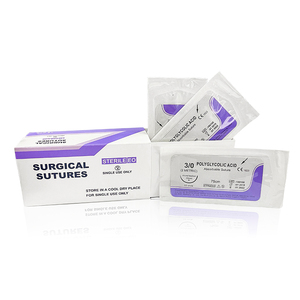
Our manufacturing facility operates under an integrated single-site model. From initial rayon polymer conversion to knitting, chemical oxidation, micro-slitting, precision needle swaging, and validated Ethylene Oxide (EO) sterilization, every stage is contained within certified ISO Class 7 and Class 8 cleanroom environments.
Quality assurance is embedded in each batch workflow:
- Raw Material Traceability: Every roll of ORC gauze and spool of suture thread is traceable back to its underlying polymer lot and raw material supplier certificate of analysis.
- Physical & Chemical Testing: Carboxyl content verification (USP monograph titration), tensile strength testing, and moisture content analysis are performed prior to final foil sealing.
- Validated EO Sterilization: Products undergo validated Ethylene Oxide sterilization cycles achieving a guaranteed Sterility Assurance Level (SAL) of 10⁻⁶, with ethylene oxide residuals strictly controlled below ISO 10993-7 thresholds.
- 11-Year Document Retention: Batch release records, environmental monitoring logs, and sterility test charts are maintained for 11 years to support post-market surveillance (PMS) and regulatory audits.
 Suture PlanetSurgical Wound Closure