1. Surgical Mesh Landscape & Regulatory Imperatives in Romania
Romania’s medical device sector is experiencing a structural transition driven by the mandatory compliance standards of the EU Medical Device Regulation (EU MDR 2017/745) and the expanding infrastructure of both public municipal hospitals and private health networks. As surgical procedures—specifically hernioplasty, incisional abdominal wall reconstruction, pelvic floor repair, and minimally invasive laparoscopic interventions (TAPP/TEP)—increase in volume across surgical hubs in Bucharest, Cluj-Napoca, Timișoara, and Iași, procurement directors face intense scrutiny regarding material bio-inertness, mechanical burst strength, and post-implant chronic pain reduction.
For foreign medical device distributors and tender bidders supplying the Romanian Ministry of Health (Ministerul Sănătății) and National Health Insurance House (Casa Națională de Asigurări de Sănătate - CNAS), sourcing Class III surgical implants like Polypropylene Hernia Mesh and absorbable wound closure materials directly from audited OEM/ODM factories is a pivotal strategy. Our single-site manufacturing facility delivers full batch traceability from raw polymer resin extrusion to final ethylene oxide (EO) sterilization, backed by Technical Files fully structured for registration with the National Agency for Medicines and Medical Devices of Romania (ANMDMR).
ANMDMR & CE MDR Files
Complete regulatory dossiers including GSPR checklists, ISO 10993 biocompatibility testing, clinical evaluation reports (CER), and UDI/GS1 compliant labeling ready for immediate Romanian registration.
Macroporous Engineering
Precision warp-knitted monofilament polypropylene structures designed with optimal pore dimensions (>1.5 mm) to facilitate rapid fibroblast penetration and tissue integration while minimizing scar shrinkages.
OEM Customization & Branding
Full private-label flexibilities: tailored mesh grammage (lightweight 28g/m² to heavy-weight 80g/m²), custom laser-cut geometries, multi-language Romanian IFUs, and custom foil sealing.
3. Surgical Application Scenarios in Romanian Healthcare Settings
To deliver genuine information gain for local surgical teams, our surgical meshes and wound-closure lines are mapped directly to the prevailing clinical protocols across Romanian public hospitals and private clinic networks (such as Regina Maria, MedLife, Sanador, and Regina Elisabeta facilities):
Abdominal Wall Surgery Units
In municipal trauma centers across Bucharest and Cluj, incisional hernia repairs demand macroporous meshes with high initial burst resistance to withstand intra-abdominal pressure surges during early postoperative rehabilitation.
Laparoscopic Hernia Centers (TAPP/TEP)
Private laparoscopic centers require pre-shaped anatomical mesh structures or highly flexible lightweight sheets that can roll smoothly through 5mm or 10mm trocars without memory distortion upon deployment.
Veterinary & Agro-Medical Networks
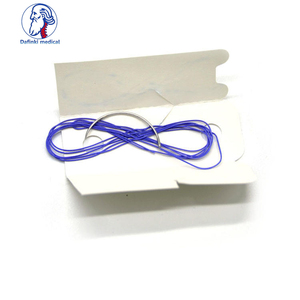
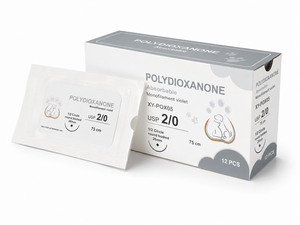
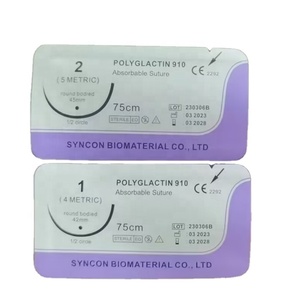
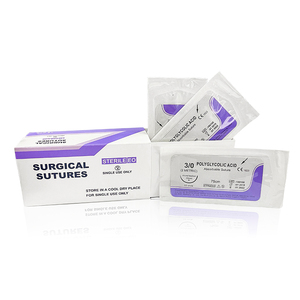
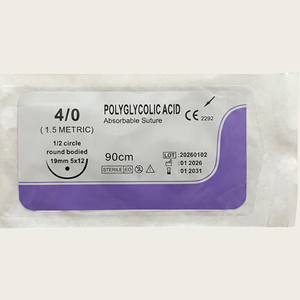
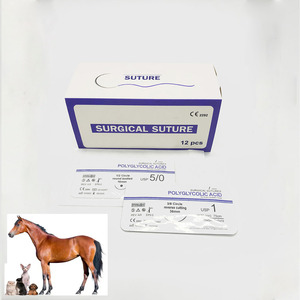
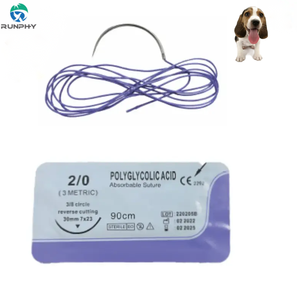
Across regional veterinary hospitals in Romania, absorbable PGA/PGLA 910 sutures and cost-efficient polypropylene meshes are widely adopted for equine, canine, and livestock soft tissue reconstructions.
Procurement Intelligence
4. Market Trends & Intent Analysis for Romanian Medical Buyers
Romanian clinical publications demonstrate a 35% increase in preference for lightweight polypropylene meshes (<35 g/m²) over traditional heavy-weight options. Surgeons aim to reduce foreign body reaction, minimize post-hernioplasty pain (chronic pain syndromes), and reduce mesh shrinkage rates from >20% down to <5%.
Trend 2: Rigorous Enforcement of EU MDR Compliance in SEAP / SICAP Tenders
In public procurement through Romania’s electronic system for public acquisitions (SEAP/SICAP), hospital purchasing committees automatically disqualify suppliers lacking valid CE Certificates under EU MDR 2017/745, full technical documentation, and certified ISO 13485 quality systems. Price remains key, but regulatory compliance is the non-negotiable gateway.
Trend 3: OEM/Private Label Demand by Local Medical Distributors
Prominent Romanian medical device distributors are expanding their proprietary brand portfolios to secure higher gross margins in private hospital tenders. They require established overseas manufacturing partners offering low minimum order quantities (MOQs), custom barcode packaging (GS1-128/UDI), and multi-language inner labeling.
Why international hospital groups and Romanian medical device brands rely on our single-site production eco-system.
Single-Site Manufacturing
From medical-grade polymer pellet extrusion, warp knitting, laser cutting, needle swaging, to primary foil packaging and Ethylene Oxide (EO) sterilization—all 7 production steps occur in one facility in Bengaluru, India.
Full Batch Traceability
Every single box shipped to Constanța port or Bucharest airport carries a batch code resolving to raw resin lots, needle pull-out test data, coating uniformity charts, and EO sterilization chamber charts.
Tender-Ready Pricing & OEM Flexibility
Eliminate intermediary markups. Gain direct factory pricing allowing Romanian importers to win competitive public hospital tenders while preserving healthy profit margins.
Procurement FAQs
6. Frequently Asked Questions for Romanian Importers & Hospitals
Addressing key regulatory, logistical, and technical inquiries common to the Romanian healthcare sector.
What documentation is supplied for ANMDMR registration in Romania?
We provide full Technical Files compliant with EU MDR 2017/745, including ISO 13485:2016 certificates, CE Certificates, Declarations of Conformity, Free Sale Certificates (FSC), ISO 10993 Biocompatibility test data, Sterility Validation reports, and multi-language Instructions for Use (IFU).
Can surgical meshes be custom-sized and packaged with private labels?
Yes. We offer complete OEM/ODM customized manufacturing. You can specify exact dimensions (e.g., 6x11cm, 10x15cm, 15x15cm, 30x30cm), shape (flat square, pre-shaped keyhole, 3D anatomical), mesh density, and request custom inner foil and outer box branding in Romanian.
What are the shipping lead times to Romania?
Standard catalogue inventory dispatches within 2 to 3 weeks. For custom OEM/ODM brand orders requiring initial artwork approval and packaging plate setup, first shipments ship within 4 to 6 weeks via air freight (Bucharest OTP) or sea freight (Port of Constanța).
How is sterility assurance maintained over long shelf life?
All surgical products undergo validated Ethylene Oxide (EO) sterilization cycles reaching a Sterility Assurance Level (SAL) of 10⁻⁶. Packed in medical-grade aluminum primary foil envelopes, shelf life is validated for 5 years under standard medical storage conditions.
What is the minimum order quantity (MOQ) for hospital tender bids?
We support flexible MOQs designed to help regional Romanian distributors participate in both small-scale private clinic quotes and high-volume public SEAP/SICAP hospital tenders without excessive upfront capital holding.
Do you provide evaluation samples for head surgeons in Romania?
Yes. Sterile evaluation samples of our surgical meshes, PGA/PGLA absorbable sutures, and monofilament polypropylene sutures can be dispatched directly to your office or clinical evaluation committee upon request.
Partner with a Certified Surgical Mesh & Suture Manufacturer
Expand your distribution portfolio in Romania with high-margin, CE MDR-compliant hernia meshes and wound closure lines direct from our audited manufacturing facility.
 Suture PlanetSurgical Wound Closure