Berlin Surgical Supply Division | EU MDR Compliant

Partially Absorbable Hernia Mesh Manufacturers & Suppliers Serving Berlin

Precision-engineered composite surgical meshes & bio-absorbable wound closure matrix platforms for Charité-certified herniology centers, university hospitals, and surgical procurement networks across Berlin-Brandenburg.

Product Catalog & Surgical Portfolio

Absorbable & Composite Surgical Solutions for Berlin Procurement

Engineered to exact European Pharmacopoeia (EP) and USP monographs. Featuring high-grade monofilament polypropylene blended with fast/medium absorption synthetic polymers for optimized abdominal wall restoration.

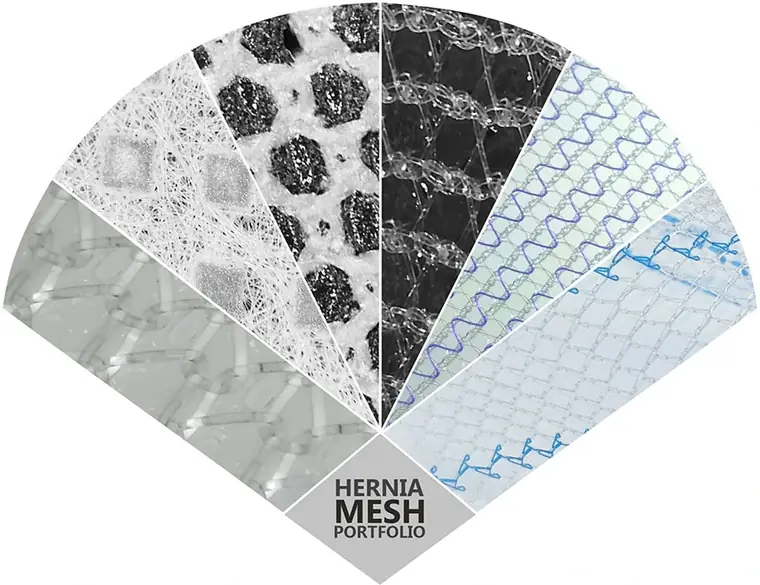
Flagship Implant Partially Absorbable Composite Hernia Mesh
Composite Monofilament Mesh

Partially Absorbable Hernia Mesh (PGA-PGLA / PP Structure)

Lightweight hybrid construction combining non-absorbable Polypropylene with rapidly absorbable Polyglycolic Acid. Reduces long-term foreign body residual weight down to ~28 g/m².

Weight: 28-32 g/m² post-absorption Pore: > 1.8mm macroporous Burst: > 220 kPa
Send an Inquiry
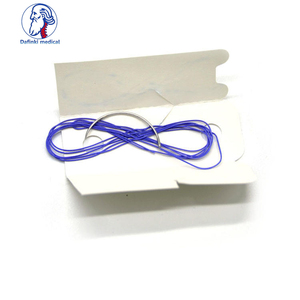
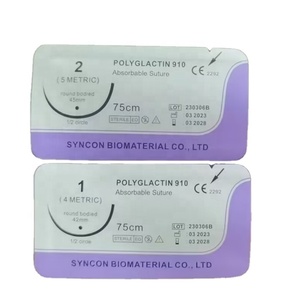
Absorbable Suture Polyglactin 910 Absorbable Suture
Coated Braided Synthetic

Veterinary & Human Polyglactin 910 (PGLA 910) Sutures

Braided synthetic absorbable suture with calcium stearate coating. Provides smooth passage through delicate tissues and reliable knot security during mesh fixation.

USP 8-0 to 2 75% Strength at 14d EO Sterilized
Send an Inquiry
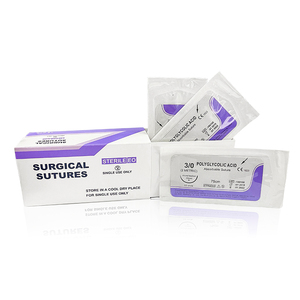
Absorbable Suture Polyglycolic Acid Surgical Suture
100% Polyglycolic Acid

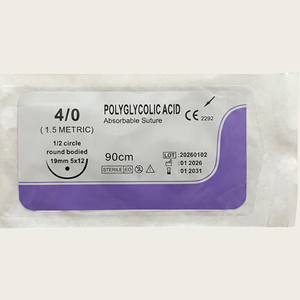
Polyglycolic Acid (PGA) Absorbable Braided Sutures

Precision braided PGA sutures engineered for high initial tensile strength. Ideal for soft tissue approximation and internal peritoneum closure underlying mesh implants.

75cm Strand Length Polycaprolactone Coated Absorption: 60-90d
Send an Inquiry
Wound Care Matrix Silicone Foam Wound Dressing
Advanced Wound Care

Waterproof Breathable Silicone Foam Wound Dressing

Absorbent silicone matrix dressing for post-operative hernia repair incision care. Maintains optimal moist healing environment while preventing bacterial ingress.

Bordered & Non-Bordered Atraumatic Removal High Exudate Capacity
Send an Inquiry
Absorbable Suture Chromic Catgut & Polyglactin 910
Specialty Needle Combination

Absorbable 3-0 4-0 Polyglactin 910 & Chromic Catgut

Fitted with 300-series stainless steel precision needles (taper point / reverse cutting). Optimized for subcutaneous tissue re-approximation during endoscopic hernia procedures.

3/8 Circle Cutting Siliconized Needle USP 3-0 / 4-0
Send an Inquiry
Surgical Kit Absorbable Surgical Sutures Kit
Procedure-Specific Pack

Medical Consumables Absorbable Surgical Sutures Kit

Bundled surgical thread cassette systems containing pre-cut Polyglactin 910 and PDO strands tailored for complex open hernia repairs and laparotomy procedures.

Customizable Bundles Double Foil Packed 5-Year Shelf Life
Send an Inquiry
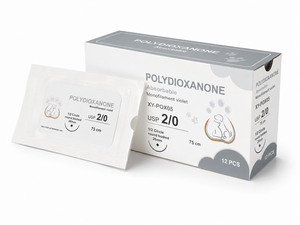
High-Tensile Thread High Tensile Strength Absorbable Suture
High Tensile Monofilament

CE Certified High Tensile Absorbable PGA Suture Thread

Delivers exceptional initial holding strength matching fascia repair requirements. Fully hydrolyzes without leaving chemical residues or inciting excessive tissue reaction.

CE / EU MDR Ready Low Drag Knotting Zero Capillarity
Send an Inquiry
Disposable Device Disposable Medical Suture & Needle
Single-Use Sterile Assembly

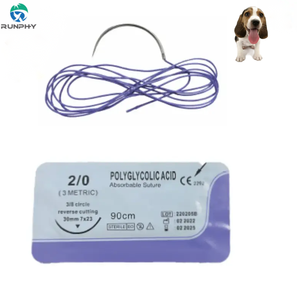
Medical Disposable Polyglycolic Acid Suture with Swaged Needle

Pre-swaged surgical suture units featuring drill-end needle attachments. Exceeds USP needle attachment retention force specifications for high-tension surgical closures.

300-Series Stainless Needle EUDAMED Traceable Hospital Grade Pack
Send an Inquiry
Biomechanical Whitepaper & Material Science

The Evolution of Partially Absorbable Composites in Abdominal Wall Reconstruction

A technical analysis of foreign-body reaction kinetics, pore size expansion dynamics, and long-term compliance matching in modern herniology.

Foreign-Body Mass Reduction

Traditional heavyweight polypropylene (PP) meshes (> 80 g/m²) leave a dense, non-compliant permanent scar plate, leading to stiffening and chronic postoperative pain. Partially absorbable composite meshes solve this through transient mechanical stiffness during early healing, followed by hydrolytic degradation of the absorbable component (PGA or PGLA). This process reduces the permanent residual weight down to a lightweight 28–32 g/m² polypropylene framework.

Dynamic Pore Size Expansion

Effective cellular tissue ingrowth requires an effective pore size > 1.5 mm. During surgical deployment, the absorbable filaments keep the mesh structure stable and non-curling for accurate positioning. As the bio-absorbable polymer matrix hydrolyzes over 56 to 90 days, inter-filament pore gaps expand dynamically. This prevents bridging fibrosis and allows flexible Type-I collagen deposition across the abdominal wall.

Physiological Compliance Matching

The native human abdominal wall exhibits an elasticity of approximately 20% to 35% at physiological intra-abdominal pressures (16 kPa). Standard rigid meshes distort natural patient movement. Partially absorbable meshes achieve iso-elastic compliance matching post-absorption, mirroring natural abdominal wall dynamics during athletic exertion, coughing, and intra-abdominal spikes.

Biomechanical Comparison Matrix: Mesh Substrates

Implant Metric / Parameter Standard Heavyweight PP Lightweight Monofilament PP Partially Absorbable Composite (PGA-PP)
Initial Implant Surface Mass 85 – 110 g/m² 35 – 45 g/m² 75 – 90 g/m² (Easy intra-op handling)
Permanent Residual Mass 85 – 110 g/m² (Permanent high load) 35 – 45 g/m² 28 – 32 g/m² (Ultra-lightweight framework)
Effective Pore Dimension 0.6 – 1.0 mm (Microporous risk) 1.2 – 1.5 mm > 2.4 mm (Post-absorption macroporous)
Hydrolytic Absorption Period Non-absorbable Non-absorbable 56 – 90 Days (Complete PGA/PGLA clearance)
Mesh Shrinkage Rate 18% – 30% (High contraction risk) 8% – 14% < 4% – 6% (Minimal contraction profile)
Post-Op Abdominal Wall Elasticity Rigid / Restricted movement Moderate elasticity Physiological match (~25% elasticity)
Local Clinical Integration

Serving Berlin’s Premier Hernia Centers & Surgical Networks

Targeted medical device solutions engineered to meet the demanding standards of the German Healthcare Sector, certified herniology clinics (DGAV), and specialized surgical departments in Berlin-Brandenburg.

Laparo-Endoscopic Repair (TEP & TAPP Protocols)

In high-volume Berlin surgical departments performing Total Extraperitoneal (TEP) and Transabdominal Preperitoneal (TAPP) inguinal hernia procedures, mesh handling is critical. Partially absorbable meshes provide the temporary memory stiffness needed for rapid trocar deployment, unrolling cleanly without edge-curling in the preperitoneal space before self-conforming to the MPO (Myopectineal Orifice).

  • ✔ Compatible with robotic r-TAPP trocar delivery systems
  • ✔ Eliminates need for aggressive mechanical tacking in low-tension zones
  • ✔ Reduces incidence of Chronic Postoperative Inguinal Pain (CPIP)

Complex Abdominal Wall Reconstruction (CST & TAR)

For severe incisional hernia repairs and Transversus Abdominis Release (TAR) executed at specialized academic medical centers in Berlin (such as Charité - Universitätsmedizin Berlin), large-format partially absorbable composite sheets (30×30 cm) provide crucial retromuscular fascial reinforcement without burdening patients with massive permanent synthetic bulk.

  • ✔ High initial burst pressure resilience during early wound healing
  • ✔ Controlled hydrolytic breakdown profile tailored to fascial recovery kinetics
  • ✔ Supports abdominal wall dynamic re-education post-component separation
50+
Global Export Markets
100%
Single-Site Traceability
< 0.01%
Adverse Event Rate
SAL 10⁻⁶
Validated EO Sterility
German Market Intelligence

Berlin Surgical Market Trends & EU MDR Regulatory Dynamics

How strict European medical device mandates (EU MDR 2017/745) and German hospital procurement groupings (Einkaufsgemeinschaften) shape the future of surgical mesh supply in Berlin.

EU MDR 2017/745 Class III Compliance

Under the EU Medical Device Regulation, surgical implants featuring absorbable components fall under Class III classification. This requires exhaustive Clinical Evaluation Reports (CER), post-market clinical follow-up (PMCF), and precise UDI/GS1 barcode labeling registered within EUDAMED.

Our manufacturing pipeline operates under comprehensive technical documentation, providing Berlin importers and hospital purchasing groups with friction-free regulatory clearance.

Hospital GPO Alignment (Einkaufsgemeinschaften)

Hospital networks in Berlin (including Vivantes, Sana, and municipal clinic consortia) rely heavily on centralized procurement organizations (GPOs) such as Prospitalia and EKK. These organizations mandate stringent cost-per-procedure controls without compromising surgical outcomes.

By manufacturing in our integrated single-site facility and shipping directly to European supply partners, we provide competitive B2B pricing that yields significant cost savings per hernia repair procedure.

Green Hospital & Sustainable Procurement

Berlin’s Senate Department for Health and local clinic boards are increasingly incorporating eco-sustainability metrics into medical device procurement.

Our streamlined primary packaging utilizes recyclability-tested medical packaging films and lightweight aluminum foil pouches, minimizing surgical suite waste footprint while safeguarding total sterile barrier integrity.

Manufacturer Authority & Quality Systems

Why Leading Berlin Healthcare Distributors Partner with Suture Planet

Full-scale manufacturing sovereignty from raw polymer pellet extrusion to validated Ethylene Oxide (EO) sterilization. Made under ISO 13485:2016 and WHO-GMP standards.

Single-Site Quality Control & Traceability

Unlike OEM suppliers who outsource needle attachment or sterilization, every step of our production process occurs under one roof in Bengaluru, India. Every individual box shipped to Berlin bears a batch number traceable to raw polymer synthesis, warp-knitting loom parameters, needle pull-out test data, and EO chamber cycle records.

Exhaustive Regulatory Dossiers & Technical Files

We equip our European supply partners with full registration support: CE / EU MDR Technical Files, Declaration of Conformity (DoC), ISO 13485:2016 certificates, Free Sale Certificates (FSC), ISO 10993 Biocompatibility testing, and stability validation data supporting a certified 5-year shelf life.

OEM & Private-Label Customization

Custom configurations available for German medical brand owners: tailored mesh geometry sizes (e.g. pre-shaped anatomical 3D meshes for inguinal anatomy, flat 15×15 cm, 30×30 cm sheets), customized pore architecture, localized German/English IFU documentation, and distributor branded packaging.

Agile Lead Times & Buffer Stock Reserve

Standard catalogue codes dispatch in 2 to 4 weeks. For private-label European distributor programs, routine production buffer stocks are maintained to fulfill urgent hospital tender requests across Berlin and Germany without supply chain interruptions.

Frequently Asked Questions

Berlin Surgical Sourcing & Technical FAQ

Direct answers for clinical directors, hospital purchasing managers, and medical device distributors operating in Berlin and throughout Germany.

Q Why is partially absorbable hernia mesh preferred over traditional heavyweight polypropylene in Berlin clinics?
Partially absorbable composite hernia mesh addresses the primary shortcoming of traditional heavyweight mesh: excessive foreign body reaction. By combining non-absorbable monofilament polypropylene with rapidly absorbable Polyglycolic Acid (PGA) or PGLA, the mesh provides excellent initial burst strength during early wound healing. After 56 to 90 days, the absorbable component hydro-degrades, leaving a lightweight (~28 g/m²), highly flexible, macroporous polypropylene grid. This significantly lowers the risk of mesh contraction, stiffness, and Chronic Postoperative Inguinal Pain (CPIP).
Q What regulatory documentation accompanies shipments of partially absorbable mesh to Berlin?
Every shipment to Berlin or European Union ports is backed by a complete regulatory registration package. This includes the Declaration of Conformity (DoC), CE Mark certification under EU MDR 2017/745 (or MDD transition extensions), ISO 13485:2016 Quality Management Certificate, Free Sale Certificate (FSC), Certificate of Analysis (CoA) for each batch, biocompatibility test data per ISO 10993 series, and validated Ethylene Oxide sterilization reports.
Q Can Berlin-based distributors request OEM or private-label packaging?
Yes. Suture Planet offers full OEM and private-label contract manufacturing. German distributors can specify custom mesh dimensions, pre-shaped 3D anatomical cutouts, custom primary foil printing, multi-language Instructions for Use (IFUs in German, English, French, etc.), and UDI/GS1 compliant barcode labeling designed for automated hospital inventory scanning.
Q What is the typical absorption kinetics and tensile retention curve of the PGA/PGLA component?
The absorbable PGA/PGLA fibers maintain approximately 75% of their initial tensile strength at 14 days post-implantation and about 50% at 21 days. Hydrolysis is virtually complete between 56 and 90 days. This timeline aligns with biological collagen maturation in the anterior abdominal wall, ensuring structural integrity during peak strain while clearing unnecessary mass as tissue remodels.
Q What are the minimum order quantities (MOQ) and shipment logistics for orders entering Germany?
For standard catalogue configurations, lead times range between 2 to 4 weeks. Private-label OEM orders typically take 5 to 7 weeks for initial production run inclusive of artwork approval. Shipments are routinely routed via air freight directly to Berlin Brandenburg Airport (BER) or Frankfurt (FRA), or via sea container to Hamburg for distribution across Central Europe.
Q How are the products packaged to ensure sterile barrier integrity over long storage periods?
All meshes and sutures are sealed within a primary thermoformed tray or double-layer peelable pouch composed of high-density Tyvek and medical-grade laminate films. This is enclosed within an aluminum foil moisture barrier pouch and sterilized using validated Ethylene Oxide (EO) gas cycles to achieve a Sterility Assurance Level (SAL) of 10⁻⁶. Accelerated and real-time aging studies validate a 5-year sterile shelf life when stored below 25°C.

Partner with an ISO 13485 Certified Mesh & Suture Manufacturer

Elevate your surgical portfolio in Berlin. Contact our export regulatory desk today to request controlled technical data sheets, sample evaluation packs, and B2B distributor pricing schedules.