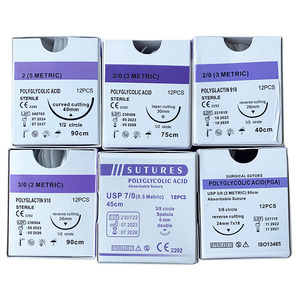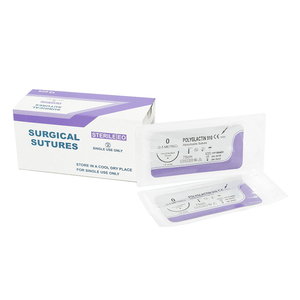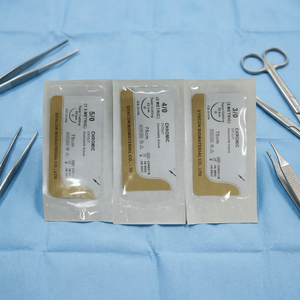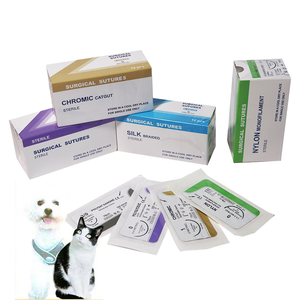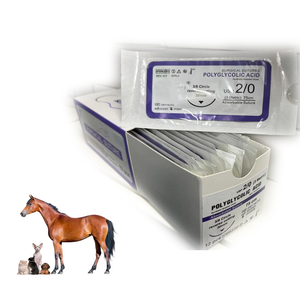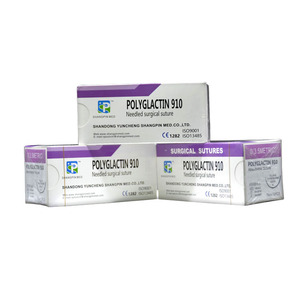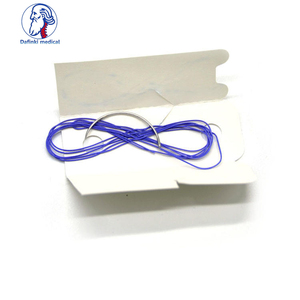
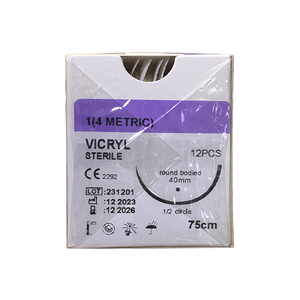
Engineered to strict USP and EP standards, fully documented for hospital supply, NUPCO tenders, and distributor OEM partnerships in Riyadh and across the Kingdom of Saudi Arabia.
Why healthcare leaders, tender agencies, and medical device distributors in Saudi Arabia demand specialized manufacturing partnerships for Polyglycolic Acid (PGA) sutures.
The healthcare infrastructure in the Central Region of Saudi Arabia—headquartered in Riyadh—is undergoing an unprecedented expansion driven by Saudi Vision 2030 and the National Transformation Program. As major healthcare clusters such as King Faisal Specialist Hospital & Research Centre, National Guard Health Affairs (NGHA), King Saud University Medical City, and private hospital networks (including Dr. Sulaiman Al Habib Medical Group and Saudi German Health) scale their surgical volumes, procurement requirements for medical consumables have become increasingly rigorous.
Polyglycolic Acid (PGA) sutures represent the cornerstone of synthetic absorbable surgical closure in hospital operating rooms throughout Riyadh. However, supplying the Saudi Arabian market involves navigating stringent regulatory oversight under the Saudi Food and Drug Authority (SFDA), participating in unified purchasing frameworks like NUPCO (National Unified Procurement Company), and solving challenging thermal-logistical dynamics unique to the Arabian Peninsula.
Every PGA suture lot shipped into Riyadh must meet strict SFDA MDMA (Medical Devices Marketing Authorization) regulations. Our manufacturing facility provides full technical files, Declaration of Conformity under CE/EU MDR 2017/745, ISO 13485:2016 verification, and WHO-GMP audit certificates for frictionless import clearance.
Riyadh’s desert ambient temperatures often exceed 45°C during summer transit. PGA hydrolyzes rapidly when exposed to moisture and heat. Our double-hermetic heavy-gauge aluminum foil blister packing guarantees zero moisture vapor permeability, preserving shelf life and tensile strength up to 5 years.
NUPCO tenders require exact specifications for USP wire gauge sizes, needle curvature tolerances, pull-out forces, and color codes. We supply fully aligned catalogue configurations—from 8-0 ophthalmic micro-sutures to heavy 2# orthopaedic loops—enabling Riyadh vendors to bid with confidence.
An authoritative analysis of high-molecular-weight polyglycolic acid homopolymers versus traditional catgut and synthetic copolymers in specialized surgical procedures.
Polyglycolic Acid (PGA) is a synthetic, braided, coated, absorbable surgical suture composed of 100% polymerized glycolic acid homopolymer ($[-O-CH_2-CO-]_n$). Unlike natural collagenous chromic catgut—which relies on variable enzymatic digestion leading to tissue inflammation—PGA degrades via predictable hydrolytic cleavage. Water molecules penetrate the polymer matrix and break ester bonds in a controlled, multi-stage process that causes minimal cellular reaction.
PGA maintains ≈75% of initial tensile strength at 14 days post-implantation and ≈50% at 21 days. Complete mass absorption occurs via hydrolytic metabolism into glycolic acid (converted to CO₂ and H₂O) within 60 to 90 days, ensuring adequate fascial support throughout the critical wound healing window.
Uncoated braided PGA can exhibit a rough surface texture causing tissue drag. Our proprietary micro-layer coating of Polycaprolactone and Calcium Stearate fills interstitial braid voids, delivering smooth knot run-down, zero sawing effect on fragile tissues, and exceptional knot security without slipping.
Swaged using premium 300-series siliconized stainless steel needles (AISI 302/304/420), our needle-thread junction strength exceeds USP and EP requirements by over 35%. This prevents accidental needle detachment during continuous suturing in deep abdominal or pelvic procedures.
| Surgical Specialty | Target Clinical Procedure | Recommended PGA Size & Needle Specs | Clinical Rationale & In-Vivo Advantage |
|---|---|---|---|
| Obstetrics & Gynecology | Cesarean Section, Hysterectomy, Episiotomy Repair | PGA USP 1# / 2/0 (Violet), 36mm 1/2 Circle Taper Cut / Round Bodied | Prevents tissue ischemia, provides reliable 3-week uterine wall tension retention, hydrolyzes cleanly without granuloma formation. |
| General & Visceral Surgery | Gastrointestinal Anastomosis, Peritoneal Closure | PGA USP 2/0 / 3/0, 26mm 1/2 Circle Taper Point (75cm) | Smooth passage through delicate mucosal layers; polycaprolactone coating eliminates bacterial wick-away effect in bowel anastomoses. |
| Plastic & Reconstructive | Subcuticular Dermal Closure, Scar Revision | PGA USP 4/0 / 5/0 (Undyed/Natural), 19mm 3/8 Circle Reverse Cutting | Undyed braid avoids dark skin show-through; smooth subcuticular glide leaves minimal track marks and eliminates suture removal. |
| Urology & Pediatric Surgery | Bladder Closure, Circumcision, Hypospadias Repair | PGA Rapide USP 4/0 / 5/0, 16mm 1/2 Circle Precision Point | Rapid absorption (mass loss within 42 days) prevents calculus formation around urinary tract suture lines and avoids pain of pediatric stitch removal. |
| Equine & Falconry Vet Care | Riyadh Royal Stables & Falcon Hospital Trauma Surgery | PGA USP 2/0 to 2#, 40mm Heavy Duty 1/2 Circle Reverse Cutting | High knot tension tolerance for large animal fascia repair; sterile single-use foil strips handle dusty desert field environments. |
Comparing Polyglycolic Acid (PGA) against alternative absorbable polymers commonly specified in Saudi Ministry of Health purchasing guidelines.
| Polymer Material | Structure & Braid | Tensile Strength Retention Profile | Mass Absorption Time | Tissue Reaction Level | Primary Clinical Preference |
|---|---|---|---|---|---|
| Polyglycolic Acid (PGA) | Braided & Coated | 75% at 14 days | 50% at 21 days | 60 – 90 Days | Very Low (Hydrolytic) | General Surgery, OB/GYN, Fascia, Gastrointestinal |
| Polyglactin 910 (PGLA) | Braided & Coated | 75% at 14 days | 50% at 21 days | 56 – 70 Days | Very Low (Hydrolytic) | Ophthalmic, General Soft Tissue, Ligation |
| Polydioxanone (PDO / PDS) | Monofilament | 75% at 14 days | 50% at 28 days | 180 – 210 Days | Minimal | High-Tension Abdominal Wall, Orthopedics, Vascular |
| Chromic Catgut | Twisted Natural Collagen | Unpredictable (Variable 7 – 14 days) | 60 – 90 Days (Proteolytic) | High (Enzymatic) | Legacy Mucosal Repair, Veterinary Practice |
| Fast-Absorbing PGA (Rapide) | Braided & Irradiated | 50% at 5 days | 0% at 14 days | 35 – 42 Days | Low | Episiotomy, Skin Closure, Pediatric Mucosa |
From virgin medical-grade polymer pellets to sterile packaged foil boxes—manufactured under one roof in Bengaluru and shipped directly to Riyadh sea/air hubs.
Polymer extrusion, high-speed braiding, automated coating, micro-drilled needle swaging, Ethylene Oxide (EO) sterilization, and cleanroom foil sealing take place entirely in our unified ISO 13485 facility. No step is sub-contracted.
Every individual box delivered to Riyadh hospital central sterile supply departments (CSSD) features a unique batch barcode tracing back to raw polymer lot certificates, needle pull-test charts, and EO chamber validation records.
We empower Riyadh healthcare vendors with end-to-end private labeling services: custom bilingual English/Arabic outer box artwork, GS1 DataMatrix UDI barcodes, customized needle combinations, and regional regulatory documentation support.
Addressing regulatory clearance, shipping logistics, shelf life, and OEM private-label ordering for Saudi Arabia.
Strengthen your hospital supply chain or OEM brand portfolio in Riyadh with ISO 13485 & CE-certified surgical sutures. Request samples, technical dossiers, and volume pricing today.