Titanised Polypropylene Mesh Manufacturers & Manufacturer for Sweden
Engineered for Advanced Biocompatibility, Reduced Shrinkage, and Superior Tissue Integration in Scandinavian Abdominal Wall Surgery & Clinical Tenders
ISO 13485 & CE / EU MDR Certified
High-Precision Surgical Consumables & Titanium Mesh Systems
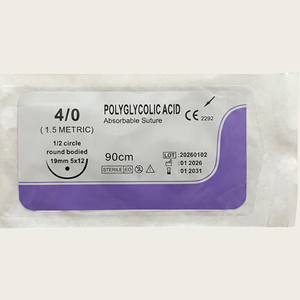
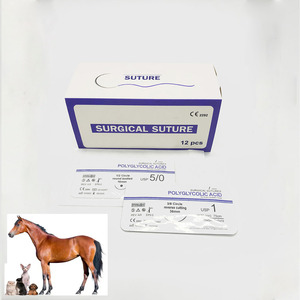
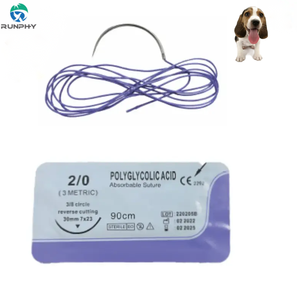
Extensive portfolio of ISO-certified absorbable sutures, non-absorbable synthetic filaments, and titanium-coated mesh constructs engineered for Swedish regional hospital supply chains.
Surgical hernia repair has evolved significantly over the past three decades. While standard monofilament polypropylene (PP) mesh remains a cornerstone of abdominal wall reconstruction, its clinical limitations—specifically foreign body reaction (FBR), chronic post-operative inguinal pain (CPIP), bridging fibrosis, and mesh shrinkage exceeding 20% to 30%—have driven the development of advanced hybrid biomaterials. Titanised Polypropylene Mesh represents the pinnacle of surface modification engineering, combining the lightweight mechanical elasticity of synthetic polymer filaments with the unmatched biological inertness of pure metallic titanium oxide coating.
Plasma-Assisted Vapor Deposition Technology
Through a proprietary physical vapor deposition process conducted in ultra-high vacuum plasma chambers, a nanometer-thin (approximately 30 to 50 nm) layer of elemental titanium is covalently bonded to the monofilament polypropylene surface. This is not a simple topcoat or physical paint layer; it is a permanent atomic interface that encapsulates the underlying polymer.
When implanted into living human tissue, the biological microenvironment does not interact directly with hydrophobic polypropylene. Instead, it encounters an inert, hydrophilic titanium oxide surface layer. This prevents protein denaturation, drastically reduces macrophage activation, and prevents the dense, inelastic scar plate formation typical of traditional heavyweight meshes.
*Data compiled from independent mechanical pull-out testing, biological compatibility protocols (ISO 10993 series), and peer-reviewed surgical registry reports.
Sweden Market & Clinical Application
Localized Surgical Application Scenarios Across Swedish Healthcare Regions
Sweden maintains one of the world's most rigorous and data-driven healthcare systems, anchored by the national Swedish Hernia Register (Svenskt Bråckregister - SBR). Procurement directors and chief surgeons across Swedish regional healthcare authorities—such as Region Stockholm, Region Västra Götaland, Region Skåne, and Region Östergötland—demand biomaterials that directly contribute to lowering chronic post-operative pain scores, decreasing hospital readmission rates, and complying strictly with EU MDR (2017/745) protocols.
Laparoscopic TAPP & TEP Inguinal Repairs
In Swedish university hospitals such as Karolinska University Hospital (Solna/Huddinge) and Sahlgrenska University Hospital (Göteborg), minimal access surgery dominates inguinal hernia repair. Titanised polypropylene mesh features ideal memory handling, allowing easy passage through 10mm trocars, rapid unrolling in the preperitoneal space, and exceptional transparency during anatomical positioning.
Open Lichtenstein & Day-Surgery Protocols
Outpatient day surgery is standard practice in Swedish municipal healthcare. Titanised mesh dramatically decreases early post-operative pain, enabling accelerated patient discharge within hours of surgery. The hydrophilic coating ensures natural tissue adherence, often reducing the need for aggressive tacking or suture fixation.
Complex Abdominal Wall Reconstruction (AWR)
For severe incisional hernias and recurrent midline defects treated at regional tertiary care centers, the ultra-lightweight titanised construction provides permanent structural reinforcement without introducing excessive synthetic material burden, significantly mitigating long-term infection risks.
Localized Market Trends & Regulatory Drivers in Swedish Medical Device Procurement
1. Strict Transition to EU MDR 2017/745 Compliance
The Swedish Medical Products Agency (Läkemedelsverket) mandates that all surgical implants delivered to Swedish public healthcare entities possess robust technical dossiers, Clinical Evaluation Reports (CER), and valid EU MDR certificates under Class IIb/Class III classifications. Manufacturers who provide complete traceability, clinical post-market surveillance (PMS) data, and transparent supply chains gain a decisive competitive advantage in regional tenders.
2. Prioritization of Patient Quality of Life (PROMs)
Swedish healthcare tenders heavily evaluate Patient-Reported Outcome Measures (PROMs). Surgical meshes that yield lower rates of stiffness, foreign body sensation, and chronic pain are explicitly favored by clinical evaluation boards over low-cost heavyweight alternatives.
3. Green Procurement & Sustainability Standards
Swedish public tenders (Offentlig Upphandling) incorporate strict environmental compliance. Our production facilities emphasize optimized energy usage, recyclable protective packaging, toxic-free sterilisation residue limits (ISO 10993-7), and reduced carbon footprint transport logistics directly into Gothenburg and Stockholm ports.
Recent global disruptions have caused Swedish hospital networks to demand guaranteed inventory stability. Operating from a fully integrated, single-site manufacturing hub allows complete control over raw material sourcing, plasma coating, needle swaging, primary foil sealing, and ethylene oxide (EO) sterilisation cycles.
Manufacturing Supremacy
Why Global Importers & Swedish Tenders Choose Suture Planet
Operating from our state-of-the-art cleanroom manufacturing facility in Bengaluru, India, Suture Planet integrates end-to-end wound closure engineering under a single quality management system.
100% In-House Single-Site Control
From polymer pellet extrusion, thread braiding, proprietary titanium oxide plasma vapor deposition, micro-needle swaging, and automatic primary packaging to validated EO sterilisation—every operation occurs under one roof without sub-contracting.
Regulatory Dossier Integrity
We supply complete, audit-ready technical files: Declarations of Conformity, CE & ISO 13485:2016 certificates, Free Sale Certificates (FSC), Certificates of Analysis (CoA), cytotoxicity reports, and ISO 10993 biocompatibility testing.
Custom OEM & Private Label Solutions
Tailored configurations for distributor brands across Sweden: customized mesh dimensions, pre-shaped anatomical cuts, specialized suture needle combinations, multi-language Swedish/English IFUs, and GS1 UDI barcode labeling.
Buyer Knowledge Base
Frequently Asked Questions for Swedish Medical Device Buyers & Procurement Officers
Detailed technical and commercial answers addressing registration, clinical standards, and import logistics for Sweden.
What specific advantages does Titanised Polypropylene Mesh offer for Swedish hernia registry (SBR) compliance?
Titanised Polypropylene Mesh addresses the core metrics monitored by the Swedish Hernia Register (SBR): post-operative pain, recurrence rates, and surgical complications. The titanium oxide surface layer drastically reduces initial foreign body reaction and chronic inflammation. This results in minimal tissue shrinkage (< 5% vs. 20-35% in heavy PP mesh), retaining abdominal wall elasticity and reducing long-term chronic post-operative inguinal pain (CPIP) scores—a key benchmark in Swedish regional hospital audits.
Are your surgical meshes and absorbable sutures fully compliant with EU MDR 2017/745 for import into Sweden?
Yes. All Suture Planet products are manufactured under an audited ISO 13485:2016 quality management system and hold technical documentation aligned with EU MDR 2017/745 regulations. We provide CE certificates, Declarations of Conformity, Free Sale Certificates (FSC), and comprehensive clinical evaluation summaries required by Läkemedelsverket (Swedish Medical Products Agency) and regional procurement agencies (e.g., Region Stockholm, Region Västra Götaland).
How does the titanium coating process prevent mesh peeling or flaking during intra-operative handling?
Unlike conventional spray coatings or dip-dye layers, our titanised meshes utilize a high-energy physical vapor deposition (PVD) plasma process. Titanium atoms bond at a covalent atomic level with the polypropylene monofilament base. This results in a flexible nanometer-thin titanium oxide layer that does not crack, flake, or delaminate even when the mesh is folded, stretched, or cut to custom sizes in the operating theater.
Can Suture Planet support private label / OEM branding for Swedish surgical distributors?
Absolutely. We offer complete OEM and contract manufacturing services for Swedish medical brand owners. We can customize primary aluminium foil packs, secondary cartons, GS1-128 / UDI barcode structures, language-compliant Instructions for Use (IFU in Swedish and English), and precise mesh size offerings (e.g., 10x15cm, 15x15cm, pre-shaped plug and keyhole geometries).
What are the lead times and delivery logistics for shipping surgical orders to Sweden?
Standard catalogue suture lines and stock mesh dimensions typically dispatch within 2 to 4 weeks. Custom OEM and private-label orders require 5 to 7 weeks for initial packaging plate production and regulatory artwork approval, with significantly faster turnarounds for repeat batches. Shipments are consolidated and dispatched via express air freight directly to Stockholm Arlanda (ARN) or Gothenburg Landvetter (GOT), or via sea container freight to Gothenburg Port.
How is product sterility and shelf life guaranteed during Nordic winter shipping and storage?
Products are sealed in double-barrier protective packaging (hermetic primary aluminium foil inner pack plus outer peelable pouch) and sterilised using validated Ethylene Oxide (EO) cycles achieving a Sterility Assurance Level (SAL) of 10⁻⁶. Accelerated and real-time stability testing under ISO 11607 standards validates a 5-year shelf life under standard medical storage conditions, protected against humidity variations and extreme ambient thermal fluctuations during transport.
How does Titanised Polypropylene compare to partially absorbable composite meshes in laparoscopic TAPP/TEP repairs?
While partially absorbable composite meshes reduce long-term synthetic mass by using PGA/PCL components, their breakdown products can trigger localized fluid collections (seromas) and transient inflammation. Titanised Polypropylene maintains structural lightness (approx. 16-35 g/m²) from day one without releasing acidic absorption byproducts, promoting clean endothelial cell attachment and lower overall seroma incidence in endoscopic repair spaces.
What batch testing reports are provided with every hospital shipment?
Every dispatched carton carries a Certificate of Analysis (CoA) detailing tensile pull-out strength, needle attachment security, EO residual gas levels (< 4mg/g per ISO 10993-7), sterility assurance test validation, and packaging burst pressure test results tied directly to the raw polymer lot number.
Partner with a Certified Suture & Titanium Mesh Manufacturer
Expand your surgical product line in Sweden with EU MDR-ready Titanised Polypropylene Meshes, PGA/PGLA absorbable sutures, and custom OEM wound closure systems. Connect directly with our international regulatory and commercial engineering team today.
 Suture PlanetSurgical Wound Closure