Manufactured under single-site Cleanroom standards (ISO Class 7/8), our surgical titanium meshes, cranial plates, and complementary absorbable sutures are specifically engineered to pass ANVISA technical reviews and ANVISA Cadastramento/Registro verification.
Completely biocompatible Grade 2 Unalloyed Titanium featuring controlled micro-pore matrices for fast osseointegration and vascularization in maxillofacial and cranial reconstruction.
Ultra-low profile malleable titanium mesh plates engineered for complex orbital floor, zygomatic arch, and mandibular defect repairs with optimal mechanical stability.
Advanced plasma-coated titanized composite mesh designed for large ventral hernia repair and abdominal wall defects, significantly reducing chronic inflammation.
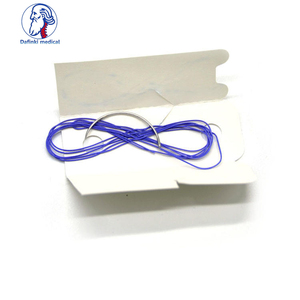
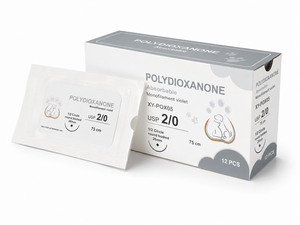
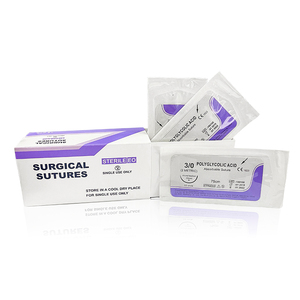
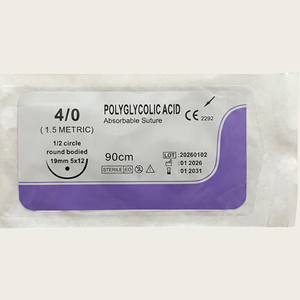
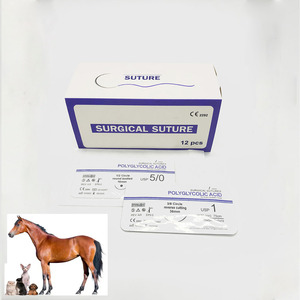
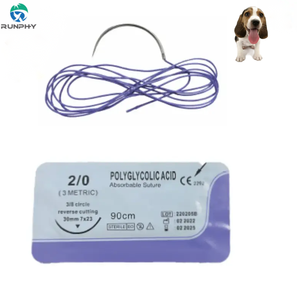
Synthetic absorbable sutures swaged to heavy-duty stainless steel needles, providing 75% tensile retention at 14 days for securing titanium mesh to biological tissue.
0.1mm to 0.2mm ultra-thin titanium micro-mesh membrane tailored for dental implantology, sinus lifts, and localized alveolar ridge augmentation in oral surgery.
Custom 3D printed Ti-6Al-4V titanium cranial implants based on CT DICOM data, tailored for neurosurgical centers in São Paulo, Rio de Janeiro, and Brasília.
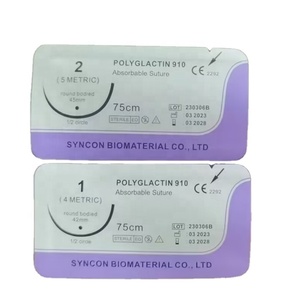
Precision-braided PGA suture material treated with polycaprolactone coating to facilitate smooth tissue passage during orthopedic titanium mesh fixation.
Versatile, cuttable titanium mesh sheets designed for emergency trauma surgery and veterinary orthopedic reconstructive procedures across South America.
From the public health network (SUS - Sistema Único de Saúde) to high-end private hospital chains (Rede D'Or, Hospital Albert Einstein, Hospital Sírio-Libanês), our medical titanium mesh products fulfill rigorous anatomical and mechanical performance standards.
In major municipal trauma centers in São Paulo, Rio de Janeiro, and Belo Horizonte, high-velocity traffic injuries and facial trauma require immediate osteosynthesis. Our Grade 2 and Grade 4 pure titanium mesh sheets offer exact malleability, enabling surgical teams to contour orbital floors, mid-face fractures, and large cranial bone defects with minimal elastic spring-back, promoting rapid osteoconduction and reducing surgical operative times.
Brazil is home to one of the largest dental surgery industries in the world, with concentrated hubs in Curitiba, Campinas, and Porto Alegre. Our 0.1mm micro-porous titanium GBR mesh provides the essential space-maintaining rigid barrier necessary for Guided Bone Regeneration (GBR). It prevents soft-tissue collapse into periodontal defects during bone grafting, supporting predictable bone formation prior to dental implant placement.
Complex incisional hernia repairs performed in public SUS hospitals demand implants that resist bacterial colonization while maintaining abdominal wall compliance. Our titanized composite mesh utilizes a plasma-vaporized titanium surface layer over ultra-lightweight polypropylene. This technology minimizes foreign body reaction (seroma formation) and reduces postoperative pain scores compared to traditional heavy synthetic meshes.
In specialized surgical oncology units, wide resection of bone tumors leaves massive structural voids. Our heavy-duty titanium structural meshes act as internal scaffolds. Combined with autologous bone grafts and secured with high-tensile PGLA braided sutures (such as our Netcryl series), these constructs restore structural integrity to long bones and pelvic rings.
Brazil's veterinary surgical sector is expanding rapidly in regions like Ribeirão Preto and Londrina. Veterinary orthopedists utilize our cuttable 0.8mm titanium micro-mesh sheets for feline and canine fracture management, spinal decompression procedures, and maxillofacial alignment, benefiting from the non-corrosive, inert properties of implant-grade titanium.
Following open-heart surgeries or traumatic thoracic disruption, sternal re-approximation using traditional wire can cause bone cut-through in osteoporotic patients. Rigid titanium mesh plates combined with high-strength non-absorbable monofilament sutures offer uniform load distribution across the sternum, reducing post-sternotomy dehiscence rates.
Understanding the statutory, economic, and operational dynamics governing medical device importation (NCM Code 9021.10) in South America's largest healthcare market.
Agência Nacional de Vigilância Sanitária (ANVISA) enforces strict control over implantable Class III and Class IV medical devices under RDC 751/2022. Foreign manufacturers must maintain a valid Brazilian Good Manufacturing Practices (BGMP / CBPF) certificate or utilize MDSAP (Medical Device Single Audit Program) audit reports. Our factory provides full technical dossier support (Dossiê Técnico) including ISO 10993 biocompatibility testing, viral safety reports, and EO sterilization validation charts to streamline your registration process.
Brazilian healthcare is bifurcated into the publicly funded SUS and private healthcare plans governed by ANS. SUS procurement tenders prioritize cost-efficiency, standardized packaging, and long shelf life (minimum 5 years). Conversely, private medical networks mandate premium titanium implant quality, anatomical pre-shaping, and low-profile designs. Our manufacturing flexibility caters to both tender volume orders and high-end private brand specifications.
Importing titanium surgical mesh into Brazil involves navigating the Imposto de Importação (II), IPI, and ICMS tax structures. Utilizing direct container shipping or air freight to key entry ports like Porto de Santos, Aeroporto Internacional de Guarulhos (GRU), or Porto de Paranaguá requires precise Harmonized System (HS / NCM) classification. We provide fully legalised Free Sale Certificates (FSC) and Certificate of Origin (COO) to streamline Mercosur customs clearing.
Comparing metallurgical and mechanical parameters of our ASTM F67 Pure Titanium Mesh, Ti-6Al-4V ELI Alloys, and complementary surgical suture lines for hospital procurement officers.
| Material Grade / Family | Composition & Standard | Tensile Strength (MPa) | Modulus of Elasticity | Biocompatibility Profile | Recommended Clinical Application |
|---|---|---|---|---|---|
| Commercially Pure Ti (Grade 2) | Unalloyed Titanium (ASTM F67) | ≥ 345 MPa | 105 GPa | Passive TiO₂ oxide coating; zero cytotoxic leeching | CMF orbital mesh, dental GBR membranes, micro-contouring |
| Commercially Pure Ti (Grade 4) | High-Purity Titanium (ASTM F67) | ≥ 550 MPa | 105 GPa | Superior mechanical resistance; bio-inert | Cranial defect reconstruction, structural skeletal scaffolds |
| Titanium Alloy (Ti-6Al-4V ELI) | Extra Low Interstitial (ASTM F136) | ≥ 860 MPa | 110 GPa | Ultra-high fatigue strength; zero corrosion | Load-bearing orthopedic mesh plates, sternal closure clips |
| Titanized Composite Mesh | Plasma-Coated PP + Ti Oxide | Flexural yield optimized | Soft-tissue matched | Reduced tissue reaction; anti-fibrotic | Abdominal wall repair, inguinal hernia laparoscopic TAPP/TEP |
| Braided Polyglactin 910 Suture | Copolymer (PGLA 90/10) | USP standard compliant | Absorbable (56-70d) | Hydrolytic degradation; minimal cellular reaction | Anchoring titanium mesh sheets to soft tissue/periosteum |
| Monofilament Polypropylene Suture | Isotactic Polypropylene | High linear pull strength | Non-absorbable | Inert monofilament; zero capillary action | Permanent mesh fixation, cardiovascular & hernia closure |
Why medical device importers, public tender agents, and private label OEM distributors in Brazil rely on our single-site manufacturing ecosystem.
From raw titanium ingots and polymer extrusion to photochemical etching, precision stamping, laser drilling, EO sterilization, and sterile primary packaging—every step occurs within our single facility. This eliminates multi-vendor supply chain risks and guarantees total chain-of-custody control.
Every finished box of titanium mesh or surgical suture carries a unique UDI/GS1 compliant batch code. This code resolves directly to raw material heat numbers, mechanical pull-out test records, cleanroom bioburden assays, and ethylene oxide sterilizer cycle charts, maintained on file for 11 years.
We provide full private-label service for Brazilian distributors. This includes customized aluminum foil blister packaging, Portuguese language Instruções de Uso (IFUs) compliant with ANVISA regulations, UDI matrix printing, and customized box dimensions tailored for regional hospital tenders.
Direct answers regarding ANVISA registration support, import procedures, product specifications, and OEM capabilities.
Expand your product portfolio in Brazil with ANVISA-ready titanium meshes, cranial plates, GBR membranes, and premium surgical sutures. Access direct factory pricing, technical registration dossiers, and full OEM customization.