1. Technical Engineering of Titanium Mesh Implants: Metallurgical Integrity & Biocompatibility
Titanium mesh represents the gold standard in reconstructive surgery, offering an optimal balance of structural rigidity, low specific weight, superior fatigue resistance, and exceptional osteointegration. As a leading primary manufacturer supplying European healthcare networks—including direct supply capabilities for hospital groups and surgical distributors in Bulgaria—our titanium mesh systems are fabricated from Medical Grade 1 to Grade 4 Unalloyed Titanium (ASTM F67) and Grade 5 Ti-6Al-4V ELI (Extra Low Interstitial) alloy (ASTM F136).
The primary advantage of titanium over traditional polymeric implants (such as heavy-weight polypropylene or PTFE) lies in its mechanical permanence and bio-inertness. Titanium spontaneously forms a passive titanium dioxide ($TiO_2$) oxide layer upon exposure to oxygen, rendering it virtually immune to corrosion in human bodily fluids. This micro-passivated surface minimizes localized inflammatory responses, cellular toxicity, and fibrous capsule contracture, providing an ideal scaffold for bone growth and soft tissue adherence.
Information Gain Insight: Unlike standard abdominal hernia meshes that rely on mechanical interlock alone, bio-engineered Titanium Mesh matrices feature dynamic 3D pore architectures (pore size ranging from 0.8 mm to 2.5 mm). This specific micro-porous structure facilitates rapid vascular ingrowth and fibroblastic colonization, reducing post-operative shrinkage to under 1.5% compared to up to 20-30% contraction observed in un-reinforced synthetic polymers.
Biomechanical Properties & Stress Shielding Mitigation
One critical challenge in orthopedic and craniomaxillofacial (CMF) reconstruction is "stress shielding"—a physiological phenomenon where overly rigid metallic plates absorb physiological loads, leading to localized bone resorption. Our titanium mesh series is engineered with variable thickness profiles (from 0.2 mm micro-mesh up to 1.5 mm structural reconstruction mesh). By optimizing wire diameter, weave pattern, and chemical etching, our manufacturing process yields an elastic modulus closely approaching native human cortical bone (approx. 15-30 GPa for ultra-thin porous configurations versus 110 GPa for solid titanium blocks).
Micro-Passivated Surface
Controlled anodic oxidation creates a uniform titanium dioxide layer, preventing ion leaching and promoting cellular biocompatibility.
3D Contourable Memory
Easily cut, bent, and shaped intraoperatively with minimal spring-back effect, maintaining exact anatomical contours.
Radiolucent Artifact Reduction
Ultra-thin strut profiles reduce scatter during CT and MRI diagnostics, ensuring high-resolution post-operative monitoring.
2. Localized Market Dynamics & Application Scenarios in Bulgaria
Bulgaria’s healthcare sector, governed by the Ministry of Health (Министерство на здравеопазването) and the National Health Insurance Fund (NHIF / НЗОК), has undergone substantial modernization over the past decade. Public university hospitals, specialized emergency centers such as UMBAL "N.I. Pirogov" in Sofia, UMBAL "St. George" in Plovdiv, and UMBAL "Sveta Marina" in Varna, alongside private clinical groups, demand medical devices certified under strict European Union Medical Device Regulation (EU MDR 2017/745).
Navigating the Bulgarian surgical device market requires total compliance with the Executive Agency for Medicines (Българска агенция по лекарствата - BDA). Procurement directors and tender managers look for suppliers capable of providing complete technical dossiers, CE marking, Declaration of Conformity (DoC), ISO 13485:2016 certification, and Bulgarian-language Instructions for Use (IFU).
Key Clinical Scenarios in Bulgarian Surgical Centers
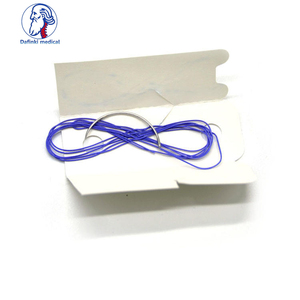
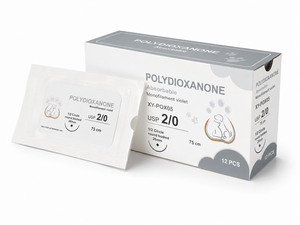
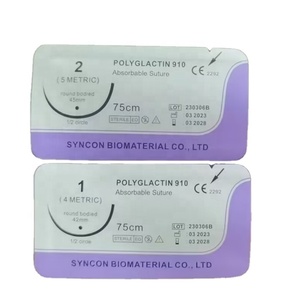
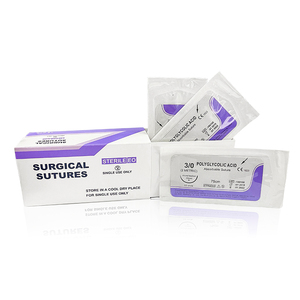
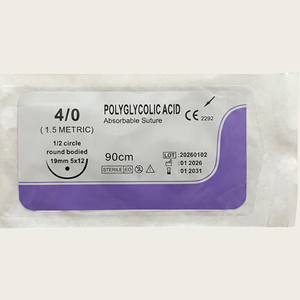
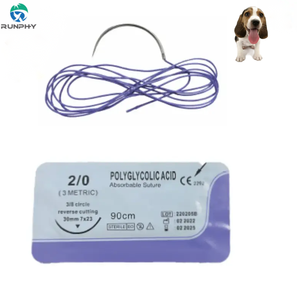
Our titanium mesh products and complementary absorbable suture lines (PGA, Polyglactin 910, PDS) address several specialized clinical sectors across Bulgarian medical institutions:
Craniomaxillofacial (CMF) Trauma & Reconstruction
In major urban centers like Sofia and Plovdiv, CMF units utilize ultra-fine 0.2 mm–0.6 mm titanium micro-mesh for orbital floor reconstruction, cranial defect repair following neurosurgical decompression, and complex facial fractures resulting from high-impact trauma.
Complex Abdominal Wall Hernia Repair (IPOM & Sublay)
Bulgarian general surgeons increasingly adopt titanium-coated or composite mesh constructs for recurrent incisional hernia repair. Titanium mesh provides unyielding structural support while mitigating chronic post-operative pain and infection rates compared to pure synthetic polypropylene grids.
Spine & Orthopedic Reconstructive Surgery
Used as rigid intervertebral cages, acetabular defect fill, and long-bone defect repair templates. Titanium mesh allows autologous bone graft containment while enduring dynamic biomechanical loads during patient rehabilitation.
Veterinary Surgery & Animal Hospital Networks
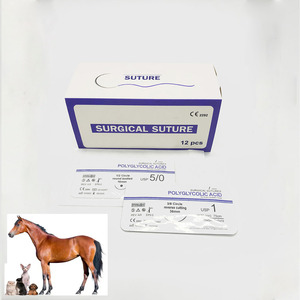
Beyond human healthcare, Bulgaria’s expanding network of veterinary clinics and agricultural research institutes requires high-tensile PGA/PGLA absorbable sutures and adaptable titanium sheets for feline, canine, and equine trauma management.
3. Material Comparison Matrix: Titanium Mesh vs. Synthetic Polymers & Sutures
To assist procurement managers and clinical directors in tender selection, the matrix below details the performance metrics of Titanium Mesh in contrast to standard Polypropylene Mesh, Absorbable PGA/PGLA Sutures, and Non-Absorbable Silk/Nylon materials.
| Performance Parameter |
Titanium Mesh (ASTM F67/F136) |
Polypropylene Hernia Mesh |
Absorbable PGA / PGLA 910 Suture |
Non-Absorbable Polypropylene Suture |
| Primary Composition |
Pure Titanium / Ti-6Al-4V ELI |
Monofilament Polypropylene |
Polyglycolic Acid / Polyglactin 910 |
Isotactic Polypropylene Polymer |
| In-Vivo Retention |
Permanent (Lifetime Stability) |
Permanent (Prone to shrinkage) |
75% at 14d; 50% at 21d retention |
Permanent (Non-degradable) |
| Full Absorption Profile |
Non-absorbable / Bio-inert |
Non-absorbable |
Complete hydrolytic breakdown in 56-70d |
Non-absorbable |
| Tissue Reaction Score |
Extremely Low (Biopassive TiO2) |
Moderate (Foreign body reaction) |
Minimal (Slight initial inflammation) |
Extremely Low |
| Infection Resistance |
High (Resists bacterial adhesion) |
Moderate (Pore clogging potential) |
High (Triclosan antibacterial options) |
High (Monofilament structure) |
| Mechanical Yield Strength |
> 240 MPa (Grade 1) to 860 MPa (Gr.5) |
15 - 30 MPa |
High initial tensile strength (USP std) |
High linear tensile strength |
| Sterilization Method |
Ethylene Oxide (EO) / Autoclave |
Ethylene Oxide (EO) |
Ethylene Oxide (EO), SAL 10⁻⁶ |
Ethylene Oxide (EO) |
4. Enterprise Advantages: Single-Site Precision Manufacturing & Global Traceability
As a global wound-closure and implantable device manufacturer headquartered in Bengaluru, India, our facility operates under unified ISO 13485:2016 and WHO-GMP quality management systems. Every step of production—from raw titanium ingot processing, wire drawing, micro-stamping, precision laser cutting, and surface polishing to suture braiding, needle swaging, EO sterilization, and cleanroom secondary packaging—is managed entirely in-house.
Full Single-Site Chain of Custody
By eliminating third-party sub-contractors, every box of titanium mesh or suture carries a lot batch number linked directly to raw material melt certificates and sterilization chamber records.
Complete EU Regulatory Support
We supply full Technical Documentation Files, GSPR Checklists, Clinical Evaluation Reports (CER), and Biological Evaluation Reports per ISO 10993 for seamless submission to the Bulgarian BDA.
OEM & Private Label Programs
Complete customized solutions including local Bulgarian language foil artwork, specialized needle-thread combinations, custom mesh shapes, GS1 DataMatrix UDI barcodes, and tender branding.
5. Frequently Asked Questions (FAQ) – Bulgarian Sourcing & Procurement
Answers to common questions regarding regulatory compliance, shipping logistics, and technical specifications for hospital buyers and surgical distributors in Bulgaria.
Q1: Are your Titanium Mesh and Absorbable Sutures compliant with Bulgarian Drug Agency (BDA) requirements?
Yes. All products are manufactured under strict ISO 13485:2016 quality standards and carry full CE certification under EU MDR 2017/745 guidelines. We provide complete regulatory documentation packs—including Declaration of Conformity, Free Sale Certificate (FSC), Certificate of Analysis (CoA), and ISO certificates—enabling fast registration and smooth entry into Bulgarian hospital tenders.
Q2: What is the typical lead time for delivering medical device orders to Bulgaria?
For standard catalog items (including standard PGA sutures, PGLA 910 kits, and standard titanium mesh sheets), dispatch takes approximately 2 to 4 weeks. For private-label programs or customized mesh geometry orders requiring specific packaging artwork and Bulgarian IFUs, initial production lead times are 5 to 7 weeks. Air freight delivery to Sofia Airport (SOF) or sea freight via Varna/Burgas ports is coordinated via our logistics partners.
Q3: Can titanium mesh be trimmed and shaped in the operating room without compromising structural integrity?
Absolutely. Our titanium mesh sheets are engineered with continuous structural struts that prevent burr formation or unraveling when cut with standard heavy-duty surgical shears. Surgeons can cut and contour the mesh to exact 3D anatomical shapes during CMF, cranial, or orthopedic reconstructive procedures while maintaining mechanical load capacity.
Q4: Do you offer OEM packaging with Bulgarian translation and GS1 UDI barcodes?
Yes. We provide complete OEM/private label manufacturing services. Our regulatory desk works directly with your team to integrate certified Bulgarian translation text into the primary foil pack, secondary box packaging, and multi-language Instructions for Use (IFU), complete with GS1-compliant Unique Device Identification (UDI) barcodes required for European traceability.
Q5: How is product sterility verified for export to EU member states?
Every production batch undergoes validated Ethylene Oxide (EO) sterilization cycles conforming to ISO 11135 standards, guaranteeing a Sterility Assurance Level (SAL) of 10⁻⁶. Residual ethylene oxide limits are strictly controlled and tested in accordance with ISO 10993-7 before lot release. Each order is accompanied by a batch-specific Sterilization Validation Report.
Q6: What absorbable suture materials work best alongside titanium reconstructive mesh?
For soft-tissue coverage over titanium mesh, surgeons commonly select braided Polyglactin 910 (PGLA) or Polyglycolic Acid (PGA) sutures (USP 2-0 to 4-0) due to their high initial knot strength and predictable 56–70 day absorption profile. For long-term fascial stabilization, monofilament Polydioxanone (PDS/PDO) or non-absorbable monofilament Polypropylene sutures are recommended.
 Suture PlanetSurgical Wound Closure