ISO 13485
Certified Quality Management
EU MDR
2017/745 Compliant Files
50+
Global Export Markets
100%
Single-Site Traceability
Executive Whitepaper: The Evolution of Absorbable Hemostats in Czechia
Modern surgical interventions within the Czech Republic’s healthcare system—ranging from complex vascular procedures at Prague’s Motol University Hospital to minimally invasive laparoscopic surgeries in Brno—demand surgical wound closure devices that combine rapid hemostasis with predictable tissue absorption. As Czech public hospital networks and private clinical groups upgrade their procurement frameworks to comply with stringent European Union Medical Device Regulations (EU MDR 2017/745), the demand for high-tier absorbable hemostats and synthetic absorbable sutures has seen unprecedented growth.
Absorbable hemostatic agents, specifically Oxidized Regenerated Cellulose (ORC), Polyglactin 910 (PGLA), and Polyglycolic Acid (PGA) structural matrices, serve a crucial role in intraoperative management. They provide immediate physical matrix support for blood clot formation while ensuring complete breakdown into biocompatible metabolic byproducts (water and carbon dioxide) within 30 to 90 days. Sourcing directly from certified international manufacturing facilities allows Czech medical distributors, tender agencies, and veterinary health chains to maintain clinical excellence while optimizing procurement overhead.
Recommended Absorbable Hemostats & Sutures Portfolio
Explore our export-grade, CE and ISO-certified absorbable surgical materials tailored for surgical centers, clinical tenders, and veterinary institutions across the Czech Republic.
Synthetic Absorbable
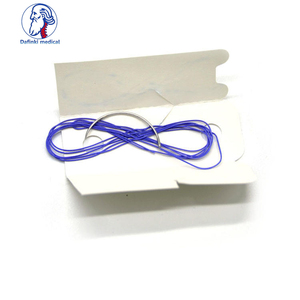
PGLA 910 & PGA Sterile Absorbable Sutures
Precision-braided Polyglactin 910 matrix with polycaprolactone coating. Delivers 75% tensile strength retention at 14 days and complete enzymatic absorption within 56–70 days. Ideal for soft tissue approximation.
USP 8-0 to 2
EO Sterilized
Vet & Human
High Tensile
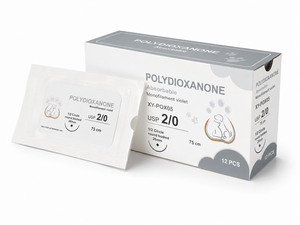
Polyglycolic Acid (PGA) Braided Suture XY-POX05
100% Polyglycolic acid construction featuring smooth surface knotting and low tissue drag. Tailored 75cm thread swaged to 300-series stainless steel needles for demanding general surgical ligation.
PGA Matrix
75cm Length
Low Tissue Drag
Advanced Hemostasis

Silicone Foam Hemostatic & Absorbent Dressing
Breathable, waterproof silicone matrix offering rapid fluid absorption and localized intraoperative wound sealing. Designed for post-operative protection and exudate control in traumatic incisions.
Exudate Control
Silicone Core
Waterproof
Dual Material
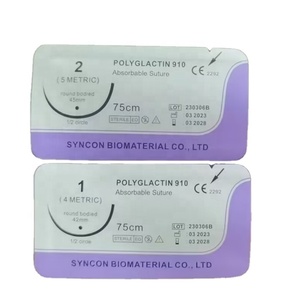
Polyglactin 910 & Chromic Catgut Suture Assembly
Versatile clinical suture selection including synthetic PGLA 910 and purified chromic collagen catgut. Engineered for mucosal closure, veterinary procedures, and rapid hemostatic tying.
USP 3-0 / 4-0
Chromic Option
Tissue-Friendly
Complete Kit
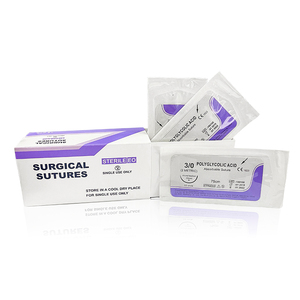
Clinical Absorbable Surgical Suture Kit (PGLA 910)
Multi-spec emergency and surgical procedure kit pre-fitted with varied needle profiles (reverse cutting, taper point). Validated ethylene oxide sterilisation with 5-year shelf life.
Procedure Ready
PGLA Threads
CE Marked
Veterinary Special
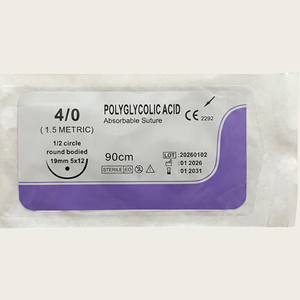
CE Certified High Tensile PGA Suture Thread
High-molecular-weight polyglycolic acid threads crafted for extreme knot security in veterinary clinics, livestock surgery, and soft-tissue reconstruction. Outstanding bio-compatibility.
CE Certified
High Knot Hold
Vet Approved
Factory Direct
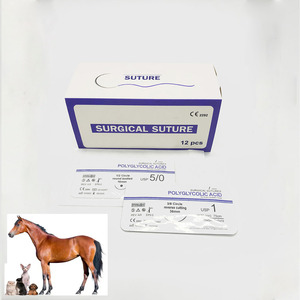
Precision Needle PGA Surgical Suture Series
Direct factory supply of PGA absorbable sutures paired with micro-pointed stainless steel needles. Formulated to minimize capillary bleed during passage through sensitive parenchyma.
Direct Export
Micro Needle
Tender Ready
Disposable Medical
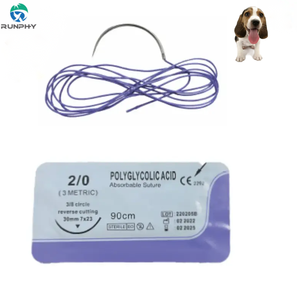
RUNPHY HC002 Series Absorbable PGA Suture
Medical grade HC002 disposable PGA suture line. Designed for fast handling, zero memory curve packaging, and dependable absorption kinetics in surgical and clinical applications.
HC002 Grade
Zero Memory
Single-Use
Comparative Analysis: Absorbable Hemostats & Polymers for Czech Hospitals
Selecting the optimal hemostatic agent or absorbable suture requires aligning the material's mechanical loss profile with the healing timeline of the target tissue. The comparative table below highlights key parameters evaluated by Czech medical procurement officers and clinical directors:
| Material Polymer / Type |
Hemostatic & Absorption Mechanism |
Tensile Strength Retention |
Mass Absorption Time |
Primary Czech Clinical Use Cases |
| Oxidized Regenerated Cellulose (ORC) |
Forms low-pH matrix; activates platelets and seals vascular capillary bleed |
N/A (Hemostatic Sheet) |
7 – 14 Days |
General Laparoscopy, Neurosurgery, Tumor Resection |
| Polyglactin 910 (PGLA) |
Hydrolytic degradation into glycolic & lactic acid monomers |
75% at 14 Days
50% at 21 Days |
56 – 70 Days |
OB/GYN, Subcuticular Closure, Gastrointestinal Tying |
| Polyglycolic Acid (PGA) |
Synthetic homopolymer hydrolysis with inert metabolic footprint |
70% at 14 Days
45% at 21 Days |
60 – 90 Days |
Orthopedics, Veterinary Surgery, General Ligation |
| Polydioxanone (PDO/PDS) |
Monofilament slow hydrolytic breakdown for extended support |
70% at 14 Days
50% at 28 Days |
180 – 210 Days |
Fascial Closure, Abdominal Wall, Pediatric Cardiac |
| Chromic Catgut |
Enzymatic digestion via localized macrophage response |
Variable (14 – 21 Days) |
90 Days |
Veterinary Mucosal Healing, Rapid Vascular Tying |
Localized Clinical Application Scenarios in Central Europe
Medical procurement in the Czech Republic operates under a dual system of centralized public healthcare tenders (guided by VZP - Všeobecná zdravotní pojišťovna standards) and private specialized clinics. Supply chain partners must provide versatile wound-closure formats adapted to specific regional medical sectors:
University Hospital Surgical Centers
In large medical complexes such as FN Motol (Prague) and FN U Sv. Anny (Brno), high-throughput operating rooms require high-density ORC hemostatic pads and ultra-sharp 300-series swaged needles to minimize intraoperative blood loss during complex oncology and organ resection procedures.
Private Outpatient & Cosmetic Clinics
Prague’s booming cosmetic surgery and outpatient plastic surgery sector demands fast-absorbing monofilaments like Poliglecaprone 25 and fine gauge PGLA 910 (USP 5-0, 6-0) that minimize tissue reaction, eliminating the need for post-operative suture removal and avoiding scarring.
Veterinary Health Chains across Czechia
With one of Europe's highest pet ownership rates per capita, Czech veterinary networks require cost-effective, bulk-packaged PGA and PGLA sutures. Pre-sterilized, high-tensile strength absorbables ensure rapid recovery in companion animal soft-tissue surgeries.
Macro Trends Shaping Surgical Consumable Sourcing in Czechia
Understanding the macroeconomic and regulatory environment is crucial for Czech medical distributors seeking long-term manufacturing partners:
1. Strict Regulatory Alignment with EU MDR (2017/745) & SÚKL
The State Institute for Drug Control (SÚKL - Státní ústav pro kontrolu léčiv) enforces strict compliance regarding medical device safety. Overseas manufacturers exporting absorbable hemostats to Czechia must maintain fully audited ISO 13485:2016 quality management systems and comprehensive Technical Files (including ISO 10993 biocompatibility testing and EO residual limits).
2. Shift Toward Direct Factory Supply Chains
To hedge against global supply chain disruptions, Czech procurement agencies are moving away from multi-tiered European re-packagers. By establishing direct contracts with primary manufacturers, distributors secure lower unit costs, custom packaging artwork in the Czech language, and guaranteed batch continuity for public tender bids.
3. Eco-Friendly & Sustainable Sterile Packaging
In accordance with Czech national environmental policies and EU green procurement directives, hospitals prioritize suppliers using recyclable primary boxes, optimized aluminum foil pouches, and reduced ethylene oxide aeration cycle times that minimize chemical footprints.
Why Partner with Suture Planet for Czech Export
As an established global exporter operating from a state-of-the-art single-site manufacturing facility in Bengaluru, India, Suture Planet bridge high-precision biomedical engineering with direct international logistics serving Central Europe.
Single-Site Quality Control
Polymer extrusion, thread braiding, coating, needle swaging, and EO sterilization are housed under one roof, guaranteeing complete batch-level traceability for regulatory audits.
OEM & Private Label Services
We provide customized foil packaging, localized Czech language Instructions for Use (IFU), and GS1-compliant UDI barcodes engineered for immediate clinical distribution.
Rapid Central European Delivery
Streamlined export logistics with DDP/CIF options directly to major logistics hubs in Prague, Pilsen, and Brno within 2 to 4 weeks for standard catalog items.
Frequently Asked Questions (FAQ) for Czech Sourcing Managers
What technical documentation is supplied for SÚKL registration in Czechia?
Every export shipment comes complete with a full regulatory dossier including the EU Declaration of Conformity under MDR 2017/745, ISO 13485:2016 certificate, Certificate of Analysis (CoA) per lot, Free Sale Certificate (FSC), and ISO 10993 biocompatibility testing summaries.
How are sterility assurance levels (SAL) validated for absorbable hemostats?
All absorbable products undergo validated Ethylene Oxide (EO) sterilization cycles reaching a minimum Sterility Assurance Level of 10⁻⁶. EO residual levels are rigorously controlled per ISO 10993-7 to guarantee patient safety.
Can we order private-label packaging with Czech text and local distributor branding?
Yes. We specialize in complete OEM and private-label programs. We customize inner foil sachets, outer unit boxes, master cartons, and multi-language IFUs (including Czech, English, and German) incorporating your brand logo and local contact data.
What are the typical shipping timelines to major Czech logistics nodes?
Standard inventory lines dispatch within 2 weeks of order confirmation. Custom OEM runs require 4 to 5 weeks for initial printing and sterilization. Air freight shipments typically arrive at Václav Havel Airport Prague within 5–7 business days.
How does Suture Planet ensure needle attachment pull-out strength compliance?
Every production batch undergoes 100% mechanical needle attachment testing adhering strictly to USP and European Pharmacopoeia (EP) monograph standards, preventing intraoperative needle detaching.
Streamline Your Absorbable Suture Supply Chain Today
Connect directly with our international export director to request product samples, technical data sheets, and competitive FOB/CIF quotation tiers for the Czech Republic market.
Inquire Now
 Suture PlanetSurgical Wound Closure