Explore our complete spectrum of medical-grade absorbable wound closure devices engineered for veterinary and human surgical applications.
Analyzing global production capabilities, material bio-absorbability, regulatory frameworks (BPOM & Halal MUI), and supply chain logistics between China and Indonesia.
The global demand for absorbable hemostatic agents and bio-absorbable wound closure solutions has experienced exponential growth over the past decade. Among the various biomaterials utilized in modern surgical operating theaters, Absorbable Gelatin Sponges hold a prominent position due to their exceptional porous micro-architecture, high liquid absorption capacity, rapid hemostatic action, and complete bio-resorption without inducing foreign-body tissue reactions. As surgical techniques evolve toward minimally invasive procedures and rapid patient recovery protocols, hospital procurement boards, regional distributors, and medical device OEMs are actively re-evaluating their international supply chains.
In this strategic industrial landscape, China has emerged as the global manufacturing powerhouse for gelatin-based biomaterials and absorbable surgical products. Chinese manufacturing facilities leverage advanced enzymatic collagen purification, controlled cross-linking technologies, automated cleanroom freeze-drying (lyophilization), and industrial-scale Ethylene Oxide (EO) and Gamma Sterilization facilities. Simultaneously, Indonesia represents one of the fastest-growing healthcare markets in Southeast Asia. Driven by the expansion of the national health insurance system (BPJS Kesehatan), an increasing density of specialized surgical centers across Java, Sumatra, and Bali, and rising clinical adoption in veterinary and dental fields, the Indonesian market demands a continuous, highly reliable supply of certified absorbable hemostats and synthetic sutures.
Understanding the interplay between Top China Gelatin Sponge Manufacturers and local Manufacturers & Distributors in Indonesia is essential for procurement managers who prioritize regulatory compliance, product traceability, cost-efficiency, and clinical performance. This comprehensive technical whitepaper explores the biochemical properties of gelatin sponges, comparative matrix dynamics against synthetic absorbable sutures (such as PGA and Polyglactin 910), regulatory pathways including BPOM (Badan Pengawas Obat dan Makanan) NIE registration and Halal certification, and the operational advantages offered by direct OEM partnerships.

A detailed engineering breakdown of porous gelatin micro-structures, enzymatic degradation pathways, and mechanical wound support capabilities.
Absorbable Gelatin Sponges feature a uniform, porous 3D foam structure. Upon contact with blood, the porous matrix rapidly absorbs 40 to 50 times its weight in liquid. Thrombocytes (platelets) lodge inside the uniform pores, triggering the intrinsic coagulation cascade and accelerating natural fibrin clot formation within minutes.
Unlike non-absorbable implants, purified gelatin sponges undergo complete enzymatic degradation by endogenous proteases (primarily collagenases). Complete bio-absorption is typically achieved within 3 to 4 weeks when implanted in tissues, or within 2 to 5 days when applied to mucosal bleeding sites, leaving zero cellular residue.
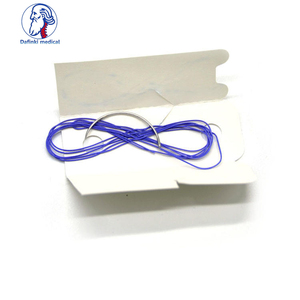
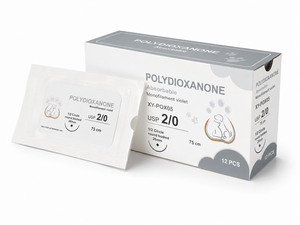
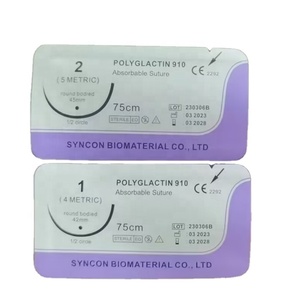
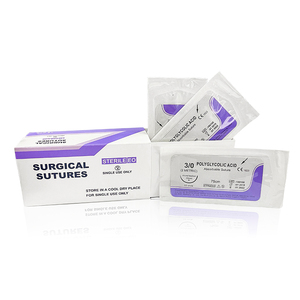
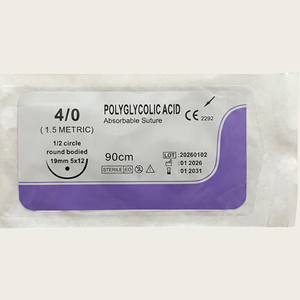
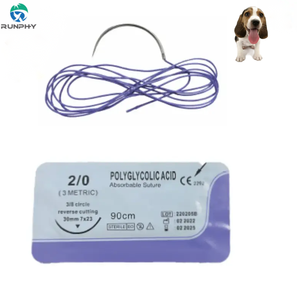
While gelatin sponges stop parenchymal bleeding and diffuse capillary oozing, synthetic absorbable sutures like Polyglycolic Acid (PGA) and Polyglactin 910 (PGLA 910) provide high mechanical tensile strength for anatomical tissue closure. Used together, they form a complete, biomimetic surgical closure solution.
This technical matrix provides actionable information gain for surgical teams selecting wound management products for operating theaters in Indonesia and global export markets.
| Product Category | Primary Material Base | Hemostatic Mechanism | Absorption Duration | Tensile Strength Retention | Primary Clinical Application |
|---|---|---|---|---|---|
| Gelatin Hemostatic Sponge | Purified Pharmaceutical Gelatin | Porous Matrix / Platelet Aggregation | 3 to 4 Weeks (Implanted) | N/A (Non-structural Matrix) | Parenchymal organ bleeding, Dental sockets, ENT, Neurosurgery |
| PGA Absorbable Suture | Polyglycolic Acid (Braided/Coated) | Hydrolytic Degradation | 60 to 90 Days | approx. 75% at 14 days, 50% at 21 days | Fascia closure, General Surgery, OB/GYN, Veterinary surgery |
| PGLA 910 Suture | Polyglactin 910 (Copolymer) | Hydrolytic Degradation | 56 to 70 Days | approx. 75% at 14 days, 50% at 21 days | Soft tissue approximation, Ophthalmic, Pediatric surgery |
| Oxidized Cellulose (ORC) | Oxidized Regenerated Cellulose | Low pH Fibrin Clotting | 7 to 14 Days | N/A (Non-structural Matrix) | Capillary oozing, Reconstructive vascular procedures |
| Silicone Foam Dressing | Medical Silicone & Polyurethane Foam | Exudate Absorption & Cushioning | Non-Absorbable (External) | High Tear Resistance | Chronic wounds, Post-operative incision protection |
Examining clinical utilization patterns across Indonesian hospitals, dental clinics, and regional veterinary practices.
In major medical centers located in Jakarta, Surabaya, Bandung, and Medan, surgical teams perform complex hepato-biliary, gynecological, and abdominal procedures daily. Absorbable Gelatin Sponges are routinely deployed to control oozing from liver beds, pelvic cavities, and retroperitoneal dissections where suturing is impractical. When combined with USP-compliant synthetic PGA and PGLA 910 sutures for abdominal wall fascia closure, surgical teams achieve optimal hemostasis and secure tissue approximation while minimizing post-operative surgical site infection (SSI) risks.
Indonesia's booming dental care sector—spanning private dental networks and public health centers (Puskesmas)—relies heavily on pre-cut dental gelatin sponge cubes (e.g., 10x10x10mm format). Following molar extractions or impacted wisdom tooth surgery, the gelatin sponge cube is inserted directly into the tooth socket. It stabilizes the blood clot, prevents dry socket complications (alveolar osteitis), and absorbs post-extraction bleeding. Local dentists frequently pair gelatin sponges with short 4-0 absorbable PGA or silk sutures to secure mucosal flaps.
In tropical climate zones across the Indonesian archipelago, climate variations and environmental allergies contribute to high rates of nasal and sinus conditions. Ear, Nose, and Throat (ENT) specialists utilize sterile gelatin sponge strips for anterior epistaxis packing and post-endoscopic sinus surgery (FESS) dressings. The sponge provides gentle mucosal tamponade, preventing adhesion formation while gradually liquefying and clearing without causing trauma during removal.
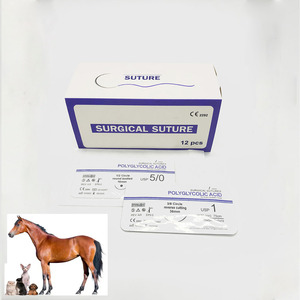
Indonesia's vast agricultural sector and rapidly expanding domestic pet industry have created significant demand for high-quality, cost-effective veterinary consumables. Veterinary surgeons across Java and Sumatra frequently utilize PGA, PGLA 910, and chromic catgut sutures alongside gelatin sponges for canine/feline spay-neuter procedures, equine wound management, and livestock surgery, relying on single-use EO sterilized packs for reliable field performance.
A complete operational guide for Indonesian importers, regional distributors, and hospital procurement officers sourcing surgical consumables from China.
In Indonesia, absorbable gelatin sponges and surgical sutures are regulated as Class II or Class III medical devices by the Ministry of Health (Kemenkes) and BPOM. Importers must secure a valid Nomor Izin Edar (NIE) prior to commercial distribution. Sourcing from accredited Chinese manufacturers with comprehensive ISO 13485:2016 certifications, CE mark technical files (EU MDR 2017/745), Free Sale Certificates (FSC), and full Biocompatibility Reports (ISO 10993 series: cytotoxicity, irritation, systemic toxicity, and hemocompatibility) significantly accelerates the BPOM evaluation process.
Because Indonesia maintains the world's largest Muslim population, mandatory Halal labeling laws (administered by BPJPH and LPPOM MUI) apply directly to gelatin-derived medical products. Gelatin derived from porcine sources is strictly restricted in Islamic healthcare settings. Leading China gelatin sponge manufacturers specializing in export markets utilize 100% Certified Bovine Gelatin sourced from Halal-certified slaughterhouses, providing complete traceability from raw bone collagen extraction to final sterile packing. This guarantees seamless acceptance across both public sector (Kemenkes/BPJS) and private Islamic hospital networks (such as Muhammadiyah and RSI group networks).
Under the ASEAN-China Free Trade Area (ACFTA) agreement, Indonesian importers sourcing surgical sutures and absorbable gelatin sponges from China can utilize Form E Certificates of Origin. Form E entitles importers to preferential import tariff rates (often reduced to 0% - 5%), significantly improving gross profit margins compared to European or American imports. Shipping routes from major Chinese ports (Ningbo, Shanghai, Shenzhen) to primary Indonesian ports like Tanjung Priok (Jakarta), Tanjung Perak (Surabaya), and Belawan (Medan) offer rapid transit times of 7 to 12 days, maintaining inventory stability.
Indonesia's tropical climate features high ambient temperatures (28°C - 34°C) and elevated relative humidity (exceeding 80%). Gelatin sponges are inherently hygroscopic and susceptible to moisture degradation if packed improperly. Premier manufacturers utilize double-layer high-barrier aluminum foil primary packaging combined with desiccants and hermetic heat sealing. This preserves product sterility, structural matrix flexibility, and a validated 5-year shelf life under tropical storage conditions.
Single-site manufacturing excellence, complete batch traceability, and customized private-label solutions for international brands.
From raw polymer processing and precision needle swaging to controlled lyophilization and sterile primary foil sealing, all production runs inside Class 100,000 (ISO Class 8) cleanrooms under a strict ISO 13485 quality system.
Every product lot undergoes rigorous Ethylene Oxide (EO) sterilization validated to achieve a Sterility Assurance Level (SAL) of 10⁻⁶, with residual EO levels strictly controlled well below ISO 10993-7 regulatory limits.
Every box of finished gelatin sponges or surgical sutures features a unique batch code linking to raw gelatin lot sources, needle pull-out test data, cleanroom environmental monitoring logs, and EO sterilization charts retained for 11 years.
Addressing common technical, regulatory, and supply chain inquiries regarding gelatin sponges and absorbable surgical sutures.
Whether you are an Indonesian medical device distributor seeking BPOM-ready gelatin sponges or an international buyer requesting custom PGA/PGLA 910 suture OEM solutions, our export engineering desk is ready to support your technical tenders.