Procurement FAQ
Frequently Asked Questions by Peruvian Importers & Hospital Buyers
Key answers regarding regulatory compliance, customs, logistics, private labeling, and technical specifications for the Peru market.
What documentation is supplied for DIGEMID registration in Peru?
We provide a complete regulatory submission dossier for DIGEMID (Dirección General de Medicamentos, Insumos y Drogas). This includes the ISO 13485:2016 certificate, CE Declaration of Conformity under EU MDR, Certificate of Free Sale (CFS) apostilled/legalized by the Peruvian Embassy, full ISO 10993 biocompatibility testing, ISO 11135 EO sterilization reports, real-time stability data, and Spanish artwork/IFU templates.
What is the shelf life and storage protocol for PGA sutures in tropical areas like Iquitos or Callao?
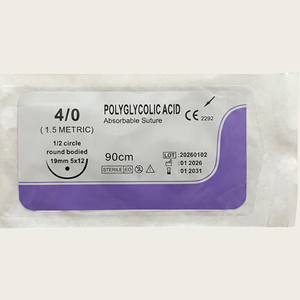
Our PGA sutures have a certified 5-year shelf life. Each suture strand is packaged in an impermeable hermetic aluminum foil pouch filled with dry nitrogen gas. This protects the hydrolytic polymer from moisture absorption. When stored below 25°C in a dry environment, the sutures maintain full mechanical integrity, sterility, and tensile profile across all climatic zones in Peru.
How does PGA compare to Polyglactin 910 (PGLA) in MINSA and EssALUD hospital tenders?
Both PGA (Polyglycolic Acid) and PGLA (Polyglactin 910) are synthetic absorbable braided sutures with similar 14-day tensile retention curves (~75%). However, PGA offers slightly longer full absorption timing (60-90 days vs 56-70 days for PGLA) and superior knot security due to our polycaprolactone coating. PGA is frequently preferred in general hospital tenders due to its excellent cost-to-performance ratio.
Do you offer OEM private labeling for medical distributors in Lima?
Yes. We specialize in custom OEM private labeling for established Peruvian medical supply companies. We can print your brand name, logo, DIGEMID sanitary registration number, and local distributor contact details directly onto the primary aluminum foil pouches, unit boxes, and shipping cartons with customized GS1 / UDI barcode data.
What are the sea freight and air freight lead times to Puerto del Callao or Lima Airport?
Standard catalog production runs ship within 2 to 4 weeks. First-time private-label orders take 4 to 6 weeks for package artwork sign-off. Transit time via ocean freight from Nhava Sheva / Chennai port to Puerto del Callao is approximately 32 to 38 days. Air freight shipments to Jorge Chávez International Airport (LIM) take 4 to 7 days.
What are the custom tariff HS Codes for surgical sutures entering Peru under SUNAT?
Sterile surgical sutures are imported under SUNAT HS Code 3006.10.10.00 (Hilados estériles para suturas cirújicas). We supply compliant Commercial Invoices, Packing Lists, Certificates of Origin, and Airway Bills/Bills of Lading formatted for smooth clearance at Callao customs.
What needle geometries and USP sizes are most in demand in Peru?
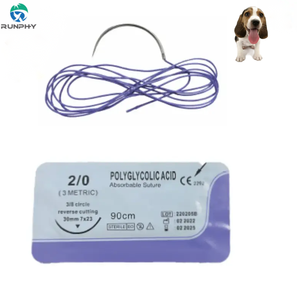
The most requested USP sizes in Peru range from 5-0 to 2. Popular needle geometries include 1/2 circle 37mm heavy reverse cutting (for OB/GYN and abdominal wall), 3/8 circle 24mm taper cut (for internal tissue), and 3/8 circle 19mm precision cutting (for skin subcuticular closure). We manufacture over 120 needle geometry variations.
What is the Minimum Order Quantity (MOQ) for factory direct export orders?
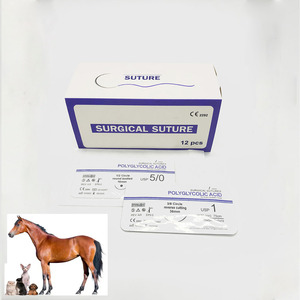
For standard catalog Suture Planet branded items, our flexible MOQ starts at 50 boxes per SKU (12 or 36 strands per box). For customized OEM private label brands, the standard initial batch MOQ is 500 boxes per specification, with buffer stock options for ongoing tender contracts.
 Suture PlanetSurgical Wound Closure