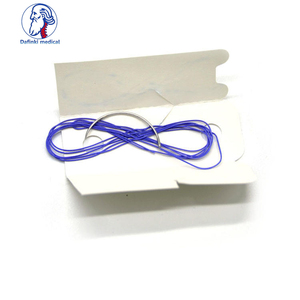
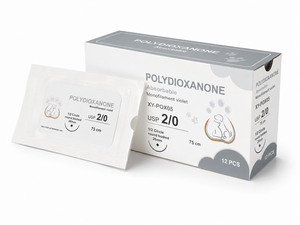
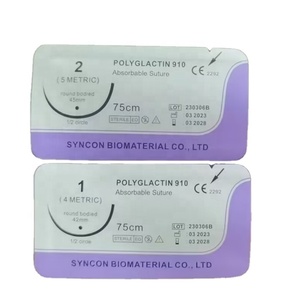
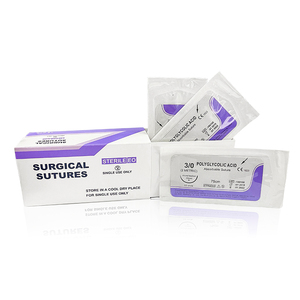
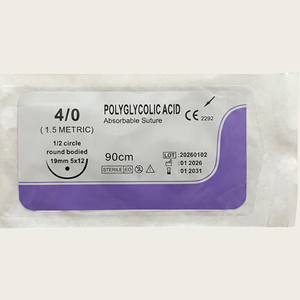
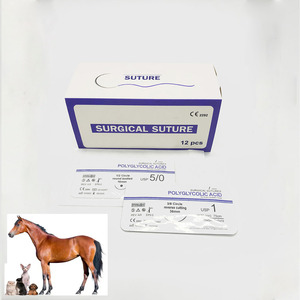
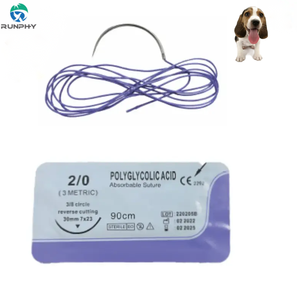
As healthcare procurement networks across the Greater Los Angeles metropolitan area—spanning major hospital systems in Downtown LA, Santa Monica, Pasadena, and Irvine—continue to optimize surgical outcomes, understanding the precise polymer chemistry of synthetic absorbable wound closure materials is paramount. Polyglycolic Acid (PGA) is a 100% linear, aliphatic polyester synthetic polymer composed of repeating glycolic acid units ($[C_4H_4O_4]_n$). Unlike natural collagen or chromic catgut sutures which depend on enzymatic breakdown (often inducing unpredictable cellular inflammation and variable tissue drag), PGA undergoes predictable, non-enzymatic hydrolytic degradation.
Through the passive absorption of physiological water molecules into the polymer matrix, hydrolytic cleavage splits the ester linkages within the polyglycolic polymer chain. This breakdown yields monomeric glycolic acid, a natural intermediate of carbohydrate metabolism that is systematically converted into carbon dioxide ($CO_2$) and water ($H_2O$) without leaving toxic tissue deposits or triggering adverse histological reactions in human or animal patients.
Clinical Insight for Los Angeles Surgical Directors: PGA sutures maintain high tensile strength during the critical initial wound healing window (70-80% strength retention at 14 days), rendering them ideal for muscle fascia closure, gastrointestinal anastomosis, subcutaneous tissue approximation, and veterinary orthopedic reattachments.
The structural degradation of PGA is bifurcated into two distinct phases: Tensile Strength Retention Half-Life and Total Mass Absorption. Clinical trial benchmarks establish that PGA sutures swaged to 300-series stainless steel needles deliver the following degradation timeline:
Raw polyglycolic acid filaments possess high inter-strand friction. To eliminate tissue dragging ("sawing effect") through delicate organ parenchyma, our PGA sutures undergo a proprietary coating process using polycaprolactone (PCL) and calcium stearate. This smooth inert outer layer reduces initial surface drag while retaining exceptionally firm knot-holding capability. Surgeons operating in Los Angeles ambulatory surgery centers (ASCs) report that 3-2-1 knotting techniques yield zero micro-slippage, providing maximum security under intra-abdominal pressures.

A rigorous structural breakdown comparing Polyglycolic Acid (PGA) against Polyglactin 910 (PGLA), Polydioxanone (PDO), and Traditional Chromic Catgut for Los Angeles clinical evaluators.
| Material Monograph | Polymer Composition | Structure & Coating | Tensile Half-Life (14d / 28d) | Mass Absorption | Tissue Reactivity Profile |
|---|---|---|---|---|---|
| PGA Sutures | 100% Polyglycolic Acid | Braided & Coated (PCL + Cal. Stearate) | 75% @ 14d / 25% @ 28d | 60 – 90 Days | Extremely Low (Non-enzymatic Hydrolysis) |
| Polyglactin 910 (PGLA) | 90% Glycolide / 10% L-Lactide | Braided & Coated (Polyglactin 310) | 75% @ 14d / 25% @ 28d | 56 – 70 Days | Minimal Synthetic Response |
| Polydioxanone (PDO/PDS) | 100% Polyester Poly (p-dioxanone) | Monofilament (Uncoated) | 70% @ 14d / 50% @ 28d | 180 – 210 Days | Minimal (Extended Support) |
| Chromic Catgut | Natural Submucosal Collagen | Twisted Strand / Chromic Salt Treated | Unpredictable (0-30% @ 14d) | 90 Days (Variable) | High (Enzymatic Phagocytosis) |
From high-volume outpatient surgical centers in Beverly Hills and Century City to emergency trauma facilities and veterinary networks across Southern California, our PGA suture lines meet stringent local demand.
Los Angeles hosts one of the largest concentrations of accredited ASCs in North America. Our sterile 12-pack and 36-pack PGA sutures deliver rapid tissue knotting, minimal drag, and reliable absorption for outpatient gynecological, urological, and general surgical procedures.
SoCal's specialty small-animal hospitals and mobile vet clinics rely heavily on PGA 2-0, 3-0, and 4-0 sutures for spay/neuter operations, feline abdominal wall closures, and canine soft tissue surgeries. Excellent knot security ensures zero post-op dehiscence.
High-end aesthetic centers in Beverly Hills and Santa Monica utilize fine USP 5-0 and 6-0 PGA sutures equipped with precision reverse cutting needles for intradermal closure, minimizing scar contracture and eliminating painful suture removal.
In recent years, healthcare supply chains in California have faced mounting disruption from tariff fluctuations, freight delays at the Port of Los Angeles (POLA), and single-source price gouging from legacy medical device brands. Modern medical procurement officers are transitioning toward direct factory-partnered suppliers who maintain strict compliance with global quality standards.
Every box of PGA sutures supplied to Los Angeles distributors and clinical facilities is produced in single-site manufacturing plants operating under ISO 13485:2016 quality management systems and audited to WHO-GMP standards. Regulatory technical dossiers include full compliance files for FDA 510(k) clearances, CE MDR 2017/745 certificates, Declaration of Conformity (DoC), and exhaustive biocompatibility testing reports (ISO 10993 series covering cytotoxicity, systemic toxicity, and intradermal reactivity).
To ensure uninterrupted supply for Los Angeles surgical centers, our logistics protocols leverage direct air freight lanes into LAX as well as consolidated maritime shipments through the Long Beach / Port of Los Angeles logistics corridor. Local distributors benefit from buffer stock management, ensuring emergency backorder fulfillment within 24 to 48 hours across LA County, Orange County, and the Inland Empire.
Private Label & OEM Options for US Distributors: We specialize in custom needle-and-thread pairings, custom foil printing, GS1-128 UDI barcode generation, and multi-language IFU inserts tailored specifically for American hospital distribution channels.
Addressing the core technical, regulatory, and purchasing questions asked by hospital materials managers, veterinary surgeons, and medical distributors in Southern California.
While both are synthetic absorbable braided sutures, 100% Polyglycolic Acid (PGA) offers slightly higher initial tensile strength and a predictable hydrolytic profile. PGA's polycaprolactone coating delivers exceptional knot seating with zero slippage, making it a cost-effective workhorse suture for general surgery, veterinary medicine, and OB/GYN procedures.
We manufacture over 120 needle configurations using premium 300-series stainless steel. Options include 3/8 circle reverse cutting, 1/2 circle taper point, tapercut, micro-point spatulated, and straight cutting needles in lengths ranging from 11mm to 48mm, precision-swaged to thread sizes from USP 8-0 to USP 2.
Each suture is individually sealed in an airtight, moisture-proof primary aluminum foil pack inside a secondary peel-open pouch. The products undergo validated Ethylene Oxide (EO) sterilization achieving a Sterility Assurance Level (SAL) of 10⁻⁶. Accelerated stability testing supports a 5-year shelf life when stored below 25°C.
Yes. We provide complete private-label branding services for surgical supply companies across California. Customizations include customer logo printing on outer cartons and foil pouches, custom UDI/GS1 barcoding, tailored USP size combinations, and specialized needle curve selections.
Every shipment comes complete with a Certificate of Analysis (CoA) matching the batch number, ISO 13485:2016 certificates, CE MDR technical documentation, Sterilization Validation Summaries, and Free Sale Certificates (FSC) to satisfy hospital audit requirements.
Standard catalog PGA suture inventory ships within 2 to 4 weeks via direct air freight to LAX. Bulk commercial distributor orders and tender allocations can be scheduled for staggered warehouse delivery across Greater LA within agreed quarterly windows.
Upgrade your surgical supply chain with ISO 13485 certified absorbable PGA sutures. Request free clinical samples, engineering datasheets, or a competitive wholesale quotation for your Los Angeles medical distribution network.